How Environmental Test Chamber in the USA Helps Universities Accelerate Research and Product Development
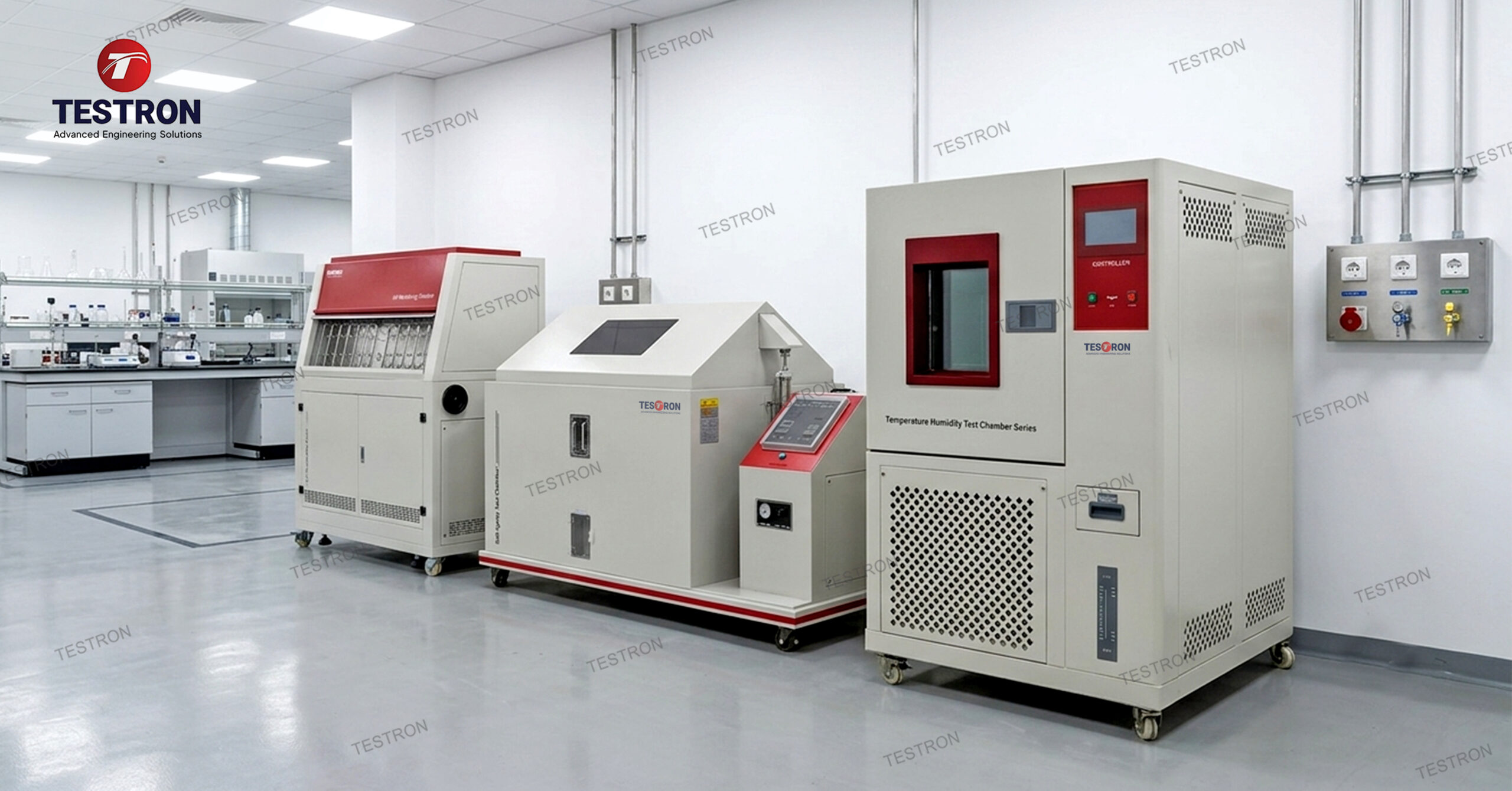
American universities are being faced with increasing challenges in conducting industry-related research, providing practical experience in laboratories for their students and developing reliable products that are able to cope in real-life situations.
An environmental test chamber in the USA provides the ability for American universities to recreate temperature, humidity, sunlight, corrosion, moisture, and climatic stress in a laboratory setting.
Rather than waiting for months or even years for natural environmental exposure, scientists can conduct an accelerated aging process using the environmental simulation chamber and see how the materials, parts, and final product react to these challenging conditions.
Therefore, the use of modern environmental testing chambers and environmental test equipment is becoming crucial for engineering, polymers, electronics, automotive, aerospace, alternative energy, packaging, textiles, construction, and materials research programs.
Why Do Universities Require an Environmental Test Chamber in the USA ?
An environmental chamber in the laboratory provides standardized conditions that can be recorded and duplicated. Such devices increase the precision of scientific studies while making it easier to compare the properties of various materials, coatings, designs, and manufacturing techniques.
The Environmental testing chambers at a university laboratory can be used for
- The study of the aging process of materials.
- Evaluation of product resistance and estimated lifespan.
- Comparison of new materials with the existing ones.
- Testing of prototypes before mass production.
- Investigation of failures related to temperature, humidity, corrosion, or sun exposure.
- Training students to work with professional material testing equipment.
- Conducted by sponsored research along with cooperation from manufacturing companies.
The Environmental Test Chamber in the USA may be programmed for temperature, humidity, thermal shock, weathering (UV), water spray, corrosion, and low-temperature cycles. The range of products offered by Testron Group includes benchtop, standard laboratory, special, and industrial environmental chambers.
Temperature and Humidity Test for Materials Study
In the USA, there is a temperature and humidity chamber that assists universities in studying the influence of controlled climatic factors on plastics, composites, coatings, electronics, packaging, medical devices, and construction materials.
With a humidity and temperature testing chamber, one can study the following:
- Water absorption and change in dimensions.
- Cracking, swelling, warping, and delamination.
- Electrical properties in a humid environment.
- Coatings and adhesives resistance.
- Behavior during storage/shelf-life studies.
A programmable temperature and humidity testing chamber allows students to conduct repeatable tests and learn about climatic effects on product properties.
When choosing a temperature and humidity chamber supplier, the university needs to evaluate chamber size, operating range, controller precision, safety system, calibration assistance, and data recording features. The cost of the temperature and humidity chamber will vary according to these criteria and customization requirements.
Improve Your University Laboratory
Ask for education rates on a temperature and humidity chamber engineered for your university laboratory needs.
UV Weathering Test for Accelerated Aging
Materials exposed to the sun outdoors will require several years to exhibit signs of fading, cracking, yellowing, or loss of tensile strength. An accelerated aging test through a UV weathering test chamber in the USA speeds up these processes by subjecting the materials to UV rays, moisture, and environmental cycles.
A UV resistance weathering test chamber is useful in studies on:
- Plastics and polymers.
- Paints, coatings, and pigments.
- Automotive parts.
- Textiles and synthetic materials.
- Roofs and construction materials.
- Solar panels and outdoor gear.
A UV test chamber assists the researcher in making comparisons between different formulations and finding those with higher resistance to sunlight and moisture. Testron’s UV test chambers have been designed to replicate the process of accelerated weathering of materials employed in industries like automotive, aerospace, plastics, textiles, coating, and construction.
The price of a UV test chamber depends on chamber size, lamp array, control and exposure system, condensing features, and other parameters. A reliable UV test chamber manufacturer should provide training, installation, and technical assistance.
Thermal Shock and Temperature Cycling Testing
The rapid heating and cooling of products can result in product failure. A Thermal Shock Test Chamber in the USA can be used in universities to investigate cracking, deformation, seals, connections, and material property changes during rapid changes in temperature.
A thermal shock chamber is especially useful in testing products such as electronics, automotive parts, aerospace components, batteries, plastics, composites, and precision assembly parts.
For slower and programmed environmental changes, a low temperature cycling test chamber or temperature cycle test chamber can subject the samples to alternating high and low temperatures. This will help in researching fatigue, thermal expansion and contraction, and reliability.
When universities want to evaluate thermal shock test chamber manufacturers or a temperature cycling test chamber manufacturer, they need to consider transition performance, temperature recovery, specimen loading capability, controller capabilities, and service capability. The thermal shock test chamber cost and low-temperature test chamber cost are greatly influenced by operational range, chamber design, specimen load capability, and automation level.
Water Resistant & IP Studies Testing
A water spray test chamber in the USA facilitates engineering departments determining if the enclosures on their products are capable of preventing the internal parts from dripping or spraying water.
A water spray test chamber, which tests for IPX1-IPX4, is capable of testing the following:
- Electrical enclosures.
- Lighting products.
- Automobile parts.
- Domestic appliances.
- Outdoor equipment.
- Sensors and controls.
A water spray test chamber enables students to learn about IP concepts as well as providing research teams an easy way of improving enclosures and seals.
When quoting for the cost of a water spray test chamber, universities should include the necessary IP rating, samples, the turntable option, water flow control, and lab requirements.
Salt Spray Corrosion Test Chamber Studies
There is a salt spray corrosion test chamber in the USA that is designed to accelerate corrosive conditions for studying metals, coatings, fastenings, platings, and surface treatments.
The salt spray corrosion chamber can be used by universities to
- Compare coatings with anti-corrosion properties.
- Study surface preparation techniques.
- Test coated and plated samples.
- Study corrosion failure modes.
- Conduct research in the automotive, marine, construction, and metal industries.
The salt spray corrosion test chamber price will depend on the size of the chamber, materials of construction, control capabilities, exposure needs, and optional accessories. Selection of a reputable salt spray corrosion test chamber manufacturer and supplier can ensure better repeatability of tests and equipment reliability.
Transforming Academic Research into Industrial-Grade Innovation
The environmental test chamber in the USA and systems enable universities to go beyond theory-based studies by providing hands-on experience in specimen preparation, test programming, environmental exposure, data acquisition, failure analysis, and technical documentation.
Research groups can also employ a climate chamber or environmental growth chamber together with other material testing apparatuses to verify new products before pilot production and industrial testing to mitigate risks associated with product development and identify weaknesses.
Thus, the cost of an environmental chamber becomes an aspect of the total investment in research rather than just an initial expense. The chamber size, temperature, and humidity ranges, customization possibilities, automation options, calibration needs, and compliance issues are some of the parameters affecting the environmental test chamber price.
Create an Industry-Grade Research Laboratory
Contact an environmental test chamber manufacturer to choose the right size of the chamber, test range, accessories, and control system for your environmental test chamber in the USA.
Reasons Why Universities Opt for Testron Environmental Test Chamber in the USA
Testron offers an environmental test chamber in the USA for research purposes, lab testing, product design and development, and industrial cooperation. Some of the environmental testing solutions offered by Testron are temperature and humidity testing chambers, thermal shock testers, temperature cycling chambers, UV weathering testing chambers, salt spray corrosion testing chambers, IP water test equipment, environmental growth chamber systems, and customized industrial climate chambers.
Universities and research laboratories working with a top environmental test chamber supplier can also be offered special educational pricing, technical training, spares, advanced lab solutions, and up to five years’ warranty on every environmental test machine and laboratory environmental chamber.
Get Educational Program Benefits
Contact Testron Group about educational pricing, laboratory design, technical training, and an environmental test chamber in the USA solution for your university.
Conclusion
The Environmental Test Chamber in the USA provides university laboratories with an effective method to speed up research activities, develop products faster and educate students on how to work in the environment of industrial-level testing facilities.
Using an environmental testing chamber and environmental simulation chamber that can simulate the effects of temperature, humidity, UV radiation, thermal shock, low-temperature cycles, water spray and salt spray corrosion, universities can investigate the behaviour of materials in a controllable and repeatable manner.
Such environmental test equipment will allow researchers to detect failures at an earlier stage, conduct comparisons of materials, prototype validation and decrease the duration of long-term environmental tests. An environmental temperature chamber or climate chamber will give the opportunity for students to get acquainted with environmental testing solutions and material testing equipment.
Working with a reliable environmental test chamber manufacturer and environmental test chamber supplier, university labs can choose equipment which will suit the university’s academic program, laboratory conditions, research needs and budget while managing the overall environmental chamber cost.
For more info, get in touch with us at info@testrongroup.com
Frequently Asked Questions
What is an environmental test chamber?
An environmental test chamber is equipment that controls certain environments to which materials or products are subjected.
Which environmental chamber is suitable for universities?
Depending on the particular program at the university, there could be a need for either a temperature and humidity chamber or special chambers for UV radiation, corrosion, water spraying, thermal shock, and temperature cycling.
What makes up the price of the environmental testing chamber?
The factors that affect the price of the environmental testing chamber are the volume of the chamber, temperature span, humidity control, cooling, controller, customization, calibration, and testing.
Can one chamber be used for both teaching and research purposes?
Yes, a programmable laboratory environmental chamber can be used for teaching and research purposes.
Are environmental chambers custom-made?
Yes, an environmental chamber manufacturing firm has the capacity to customize the capacity, operating range, specimen holder, viewing window, controller, safety features, and data recording capability of the chamber.