Pipe End Closure in the USA: Key Factors Engineers Should Consider Before Selecting a Testing System
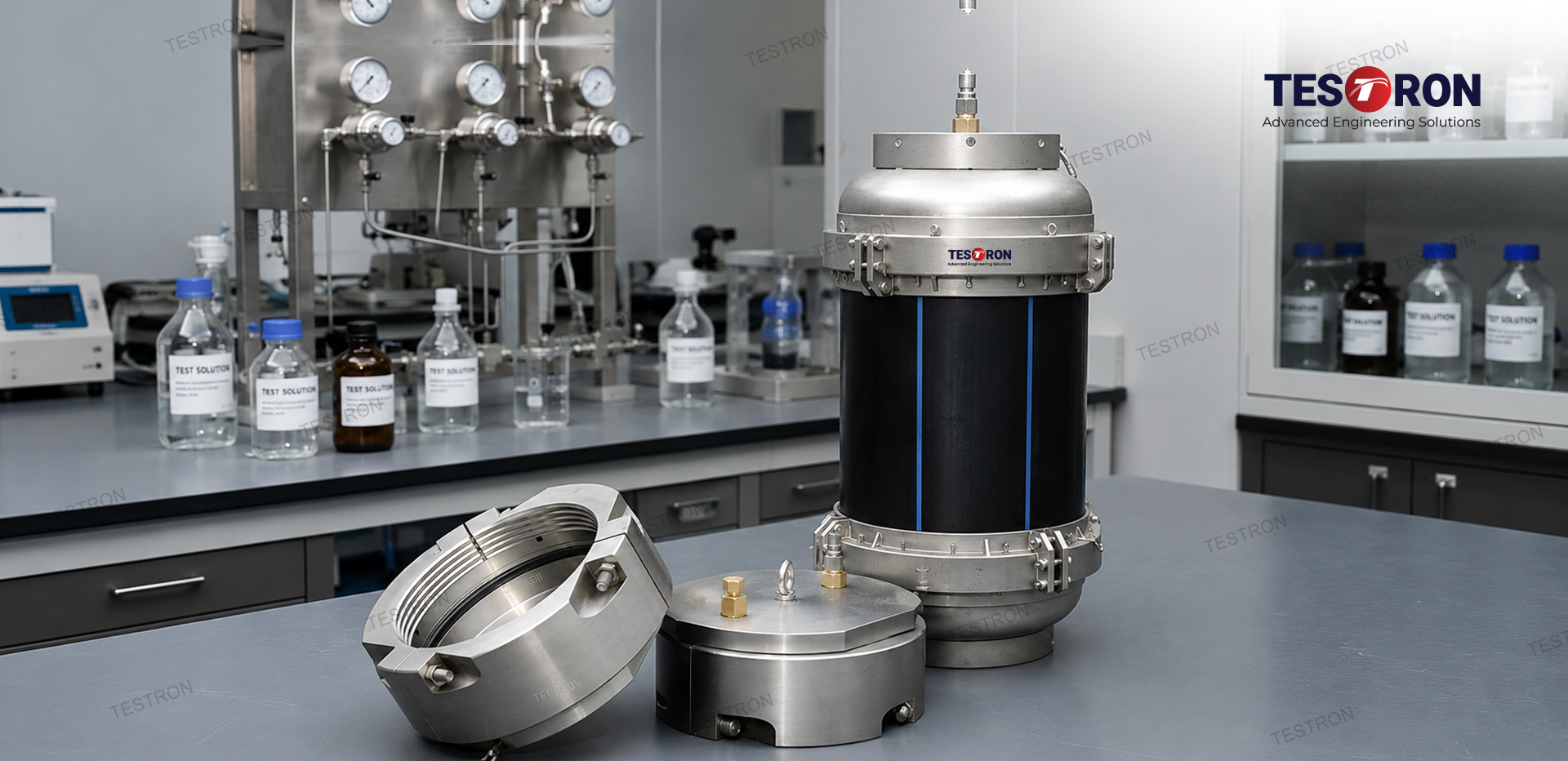
It is critical to use hydrostatic pressure testing to confirm the strength and durability of plastic piping systems. Nevertheless, the precision of such a test, in addition to the pressure testing equipment, will depend largely on the pipe sealing system chosen.
Proper selection of the pipe end closure in the USA guarantees the creation of a reliable and tight seal of the pipe so that the pressure builds up inside the pipe sample. The improper choice of the end seal will lead to various problems, such as leaks, unpredictable pressure levels, pipe specimen displacement, and others.
Thus, choosing the proper pipe end closure in the USA for engineers, pipe manufacturing companies, and quality control labs in the USA and UK is an important technical task and not just buying any accessory.
Definition of Pipe End Closure
The pipe end closure in the USA is placed at either one or both ends of a pipe sample when conducting internal hydrostatic or burst-pressure tests. This is because the pipe end closure device blocks the sample, enabling the entry of water pressure inside the pipe.
These systems are primarily used with the hydrostatic pipe testing machine to test thermoplastic pipes under constant pressure, at elevated temperatures, or at pressures that can lead to their failure.
Unlike regular protective Pipe End Caps, laboratory-grade end closures should be able to withstand the test pressure.
Common applications include:
- Plastic pipe extrusion lines
- PVC, PE, HDPE, and PP pipe producers
- Independent material testing laboratories
- Infrastructure suppliers for water and gas supply systems
- Organisations engaged in certification and inspection
- Universities and research facilities
Factors To Take Into Account Before Choosing a Pipe End Closure in the USA
1. Specimen Pipe Diameter Range
Firstly, it is necessary to take into account the range of the external diameter of the specimen pipes. It is necessary that the end closure for plastic pipes fits the pipe tightly and touches its perimeter entirely.
A leading pipe end closure manufacturer like Testron Group produces end closures for a wide range of pipe diameters of approximately Ø12 mm up to Ø1200 mm, making it possible to test both small diameter tubes and large plastic pipes.
Before requesting a quote, it is necessary to make a list of:
- Minimum and maximum pipe diameters
- Materials of pipes
- Wall thicknesses or SDR designations
- Length of specimen pipes
- Number of specimen pipes tested at once
If an organisation conducts tests for different pipe diameters, it is better to purchase the whole range of closures.
2. Maximum Test Pressure
The required closure pressure rating should be equal to or greater than the maximum pressure that will be developed during the test cycle.
Pressure specifications are different depending upon the pipe size, material, wall thickness, testing temperature, testing method used, and whether the test will be carried out for hydrostatic testing or for burst tests.
The specified Testron test system is capable of pressures of 100 bar, depending upon the size of the closure and the test setup used.
It should not be considered at all by engineers to choose an end closure for plastic pipes based upon the pressure rating of the finished pipe alone.
3. Complying With Testing Standards
Pipe ends for testing of plastic tubes should be in line with the standards used in your laboratory or by your customers.
Some of the common testing standards are:
- ISO 1167 for determination of the resistance of thermoplastic pipes to internal pressure
- ASTM D1598 for time-to-failure testing at constant internal pressure
- ASTM D1599 for short-time hydraulic failure pressure testing
Testron pipe ends have been developed for use in testing in accordance with ISO 1167, ASTM D1598, ASTM D1599. Laboratories working in the United States and British markets should find out the required ASTM, ISO, EN, and customer procedures before purchasing.
4. Closure Material and Corrosion Resistance
The closure materials will always be exposed to water, pressure, and temperature changes. The selection of the closure materials will determine the life span and maintenance costs.
Stainless steel is the preferred choice because of its high resistance to corrosion and strength.
While low-end pipe end closure price points are usually appealing, high corrosion rates, leaks, surface damage, and sealing failure will result in higher long-term costs.
5. Sealing Performance
Sealing performance is the basic function of a closure. The O-ring design, clamping, and depth of sealing should be considered as well as compatibility with non-circular pipes.
A good plastic pipe end closure will continue to seal effectively even if the specimen is oval, chamfered or variable in dimensions.
The Testron system has a designed distance between the O-ring and the internal base, which is needed for sealing chamfered and oval PE pipes.
The O-rings should also be easily visible for inspection and replacement.
6. Mounting, Aligning and Operator Convenience
Installation that is difficult to perform could slow the process of preparing the sample. Ideally, an efficient pipe end closure machine or closure set would enable the operator to mount, align and demount the sample easily.
Split-type clamps may be useful for automatic alignment, whereas a lightweight and hollow design could enable easy handling of the larger closures.
Some of the issues which need to be addressed are:
- Number of operators for installation
- Any special equipment required
- Centring of the sample
- Ease of release of trapped air
- Drainage of water after testing
- Handling of closure after being wet
Technical Considerations Matrix for Pipe End Closure in the USA
Factor to Consider | Checks by Engineers | Importance |
Checks by Engineers Importance | Pipe size Limits on the specimen OD | To guarantee the right fit and seal |
Pressure rating | Maximum test pressure with tolerance | For avoiding any leakage or rupture |
Pipe material | PVC, PE, HDPE, PP or other thermoplastic materials | To ensure that seals match |
Standards | ASTM D1598, ASTM D1599 and ISO 1167 | For proper testing |
Construction material | Stainless steel or coated carbon steel | For better corrosion resistance and longevity |
Clamp style | Split clamps and their centering and locking methods | For easier installation and accurate positioning of specimens |
Venting and draining | system Bleed valve, air inlet, and drainage system | To ensure constant pressure and ease of use |
Supplier | Technical support, sizing guidance, and spare seals | For safer purchase and operation |
Choose the Right End Closure for Your Pipes
Are you designing a new pipe testing laboratory or increasing the capacity of an existing one?
Please get in touch with Testron Group about your pipe dimensions, material, and desired test pressure.
7. Safety Features
Hydrostatic testing involves pressurisation, making operator safety paramount. The closures themselves can also be large and cumbersome, making recovery after specimen failure from a water bath challenging.
Some important safety features are:
- Mechanical lock capability
- Clamp securement
- Steel chain retainers
- Specimen venting
- Water drainage control
- Test tank compatibility
The above-mentioned design incorporates a steel chain that is intended to keep the lower closure from falling to the bottom of the water tank in the event of specimen failure.
It is also important for labs to take proper safety precautions as part of their pressure testing procedures.
8. Compatibility of Connection
Ensure that the connection you will use is compatible with your present hydrostatic pressure tester, manifold, and pressure lines.
For the Testron closure, the connection is male, 1/4 inch in size, and is delivered together with a bleed valve.
It is very crucial to confirm connection compatibility especially if you have decided to buy the closures as separate units from the main pipeline test equipment.
9. Capacity for Testing and Future Growth
Avoid depending on the existing size range of pipes. It might be that the lab decides to add larger-size pipes or higher-pressure products in the future.
A modular system of closures or a full range of sizes could allow for future growth to be simple. This is especially useful for labs and manufacturers who cater to different industries such as water distribution, irrigation, gas networks, and construction.
Develop a Pipe-Testing Package
Pair the correct pipe end closure in the USA with hydrostatic testers, thermal testers, and other material testing solutions to build a comprehensive lab package for your quality and design testing needs.
10. Manufacturer and Supplier Services
It is not enough for a pipe end closure manufacturer to just provide you with the hardware itself. Good technical services are necessary for verifying diameter, pressure rating, fitting, material and application.
If you are comparing pipe end closure suppliers, consider:
- Sizing information for products
- O-ring and spare part availability
- Pressure and diameter specifications
- Compatibility with current systems
- Installation advice
- Warranty services
- Service internationally
- Service in the USA and UK
The cheapest option is not always the best pipe end closure. The right system delivers secure sealing, safe testing, and complete technical support throughout its operational lifetime.
What Will It Cost to Seal Off Your Pipe End?
Various factors determine the pipe end closure price:
- Pipe diameter
- Pressure rating
- Material used – stainless steel or carbon steel
- Design of the clamp mechanism
- Connectors and valves required
- Amount of sets needed
- Unique pipe measurements
- Shipping location
Bigger pipe ends usually need more materials and heavy-duty clamps, raising the cost accordingly. Seeking an accurate quotation that takes into account your sample information will be better than estimating from online figures.
Technical Quotation Request
Need for pipe end closure in the USA or need help with testing your pipe in the UK? Provide Testron Group with your pipe OD, materials, testing standards, max. pressure, and quantities needed to get a customised quote for your product.
Conclusion
The choice of the right pipe end closure in the USA is a key component for a successful and reliable hydrostatic pressure testing process. Engineers need to consider many aspects such as pipe size, testing pressure, materials, sealing system, standards, connections, mounting and safety.
The right selection of pipe end closures will improve laboratory performance and prevent leakage issues, helping manufacturers to get reliable results using their pipe testing machine.
For companies located in the USA and the UK, cooperation with an experienced manufacturer and supplier will make laboratory expansion easier in the future.
For more info, get in touch with us at info@testrongroup.com
Frequently Asked Questions
What is the purpose of a pipe end closure?
A pipe end closure provides sealing of the plastic pipe test specimen when conducting the hydrostatic pressure or burst-pressure tests with building up of controlled internal pressure inside the sample.
Which test methods use pipe end closures?
Pipe end caps closures are often used for tests conducted in accordance with ISO 1167, ASTM D1598 and ASTM D1599 standards. The design of the closure is determined by the test method and pipe dimensions.
Is one closure suitable for different pipe diameters?
Normally, each closure and clamp is designed for a certain range of diameters. Multiple sets of closures will be required for laboratory conducting tests with several pipes.
Should I prefer stainless steel pipe end caps closures?
Stainless steel is the preferable choice for wet laboratory conditions due to high strength, corrosion resistance and long lifetime. Carbon steel versions might be available too.
What details must be provided while making a quote request?
Pipe material, pipe size, thickness/SDR, maximum pressure, standards, connections, quantity of sets, delivery place.