Drop Weight Impact Tester in the USA: ASTM & ISO Standards You Must Know for Accurate Testing
Summary
Drop weight impact testing is a mission-critical quality control process for industries ranging from pipe manufacturing to aerospace. In the USA, compliance with ASTM and ISO standards is not optional — it directly determines product safety, regulatory approval, and market competitiveness. Whether you’re sourcing a drop weight impact tester for polyethylene pipe testing or structural plastic evaluation, understanding the governing standards is the first step toward accurate, defensible results. This guide walks engineers, lab managers, and procurement heads through the most important standards, machine specifications, and buying considerations — backed by Testron Group’s decades of expertise in material testing equipment.
INTRODUCTION
Thermoplastic pipes and fittings may be subjected to impact shock while being moved around, installed, and used. Tests conducted to assess the resistance of these pipes and fittings to the external shocks help the manufacturers ensure the reliability of their products.
The Drop Weight Impact Tester, or Falling Weight Impact Tester, subjects a specimen of the pipe or the pipe itself to a shock caused by the specified drop weight. It is crucial for the producers and quality control laboratories to have equipment meeting the testing procedure requirements.
The ASTM D2444 test method is one of the most important standards used in the United States to determine the impact resistance of thermoplastic pipes and fittings utilizing a falling-weight tip. ISO 3127 is an international standard specifying the method of determining the impact resistance of thermoplastic pipes of circular cross section to external blows.
Looking for a drop weight impact tester in the USA?
Inform us about your pipe material, outer diameter, applicable standard, and testing requirement to have a proper setup and quote.
What is a drop weight impact tester?
A drop weight impact tester is a drop impact test machine that measures the performance of materials and products subjected to an impact.
In a typical test, a striker of pre-defined weight and shape is dropped from a certain height onto the sample. The state of the test specimen after the impact, whether cracked, broken, or otherwise failed, is then determined in accordance with the test standard.
In the case of thermoplastic pipe testing, the drop weight impact tester in the USA system is tailored to the standard, including the following factors:
- Mass and shape of the striker
- Height of the drop
- Dimensions of the test specimen
- Specimen support
- Sample conditioning
- Number of samples
The right drop weight impact test equipment setup should always be chosen based on the standard and the test method.
Why is Drop Weight Impact Testing Significant for Plastic Pipes?
Plastic pipes might face impact loads during manufacture and use. Utilizing a drop weight impact test machine allows the manufacturer to examine the impact resistance of the thermoplastic pipe and fitting under given impact conditions.
As per ASTM D2444, the results from the falling weight impact test machine can be used as a basis to develop the requirement in the product standard for comparing material changes or process changes and investigating environmental influences.
The drop weight impact test will therefore help in:
- Quality control of thermoplastic pipes
- Product development and material comparisons
- Process improvement
- Evaluation of batch-to-batch consistency
- Research and development
- Compliance test
- Impact resistance verification
ASTM D2444 for Thermoplastic Pipe Impact Test
ASTM D2444-25 is the latest active ASTM edition on evaluating the impact resistance of thermoplastic pipes and fittings with a tip (falling weight) using a drop weight impact tester in the USA. The ASTM states that the practice covers thermoplastic pipes and fittings tested under specified impact conditions using interchangeable striker noses and specimen holders.
This drop weight impact test standard may apply in situations where impact resistance of thermoplastic pipe products like PVC, PE, etc., needs to be evaluated in accordance with the relevant product specifications using a drop weight impact test machine.
Some factors considered during the ASTM D2444 impact test include:
- Type of thermoplastic pipe/fitting
- Configuration of striker/tup
- Specimen holder
- Conditions of drop
- Test temperature
- Test procedure
- Evaluation of failure
Noteworthy: The specific configuration for conducting the test must be determined from the relevant ASTM edition and product specification.
ISO 3127 for Impact Test on Thermoplastic Pipes
ISO 3127:1994 provides a drop weight impact test standard method to assess the resistance of thermoplastic pipes with a circular cross-section to external blows by the round-the-clock method using a falling weight impact test device. According to ISO, the current edition of this standard was reviewed and confirmed in 2022.
This ISO 3127 standard executed on a drop weight impact tester in the USA is of great interest to those laboratories and manufacturers who use international standards for thermoplastic pipings.
The other relevant international standard is ISO 11173:1994. This standard provides a test method for determining the resistance of thermoplastic pipes to external blows by the staircase method. ISO confirms this standard as current after its review.
ASTM D2444 & ISO 3127 – Comparison
Factor ASTM D2444 ISO 3127
Primary purpose | Thermoplastic piping and fittings | Thermoplastic pipes |
Primary purpose | Thermoplastic piping and fittings | Thermoplastic pipes |
Method of impact | Tup/ Falling weight | Blow resistance |
Location/applications | Frequently used in U.S.tests | Used internationally |
Test sample | Pipe/ fittings as per test method | Circular thermoplastic pipes |
Criteria | Depending upon the product specification | Depending upon the ISO/Product Specification |
Not sure which test method is right for you?
Email the materials and required specifications of your pipe to the Testron test engineering group.
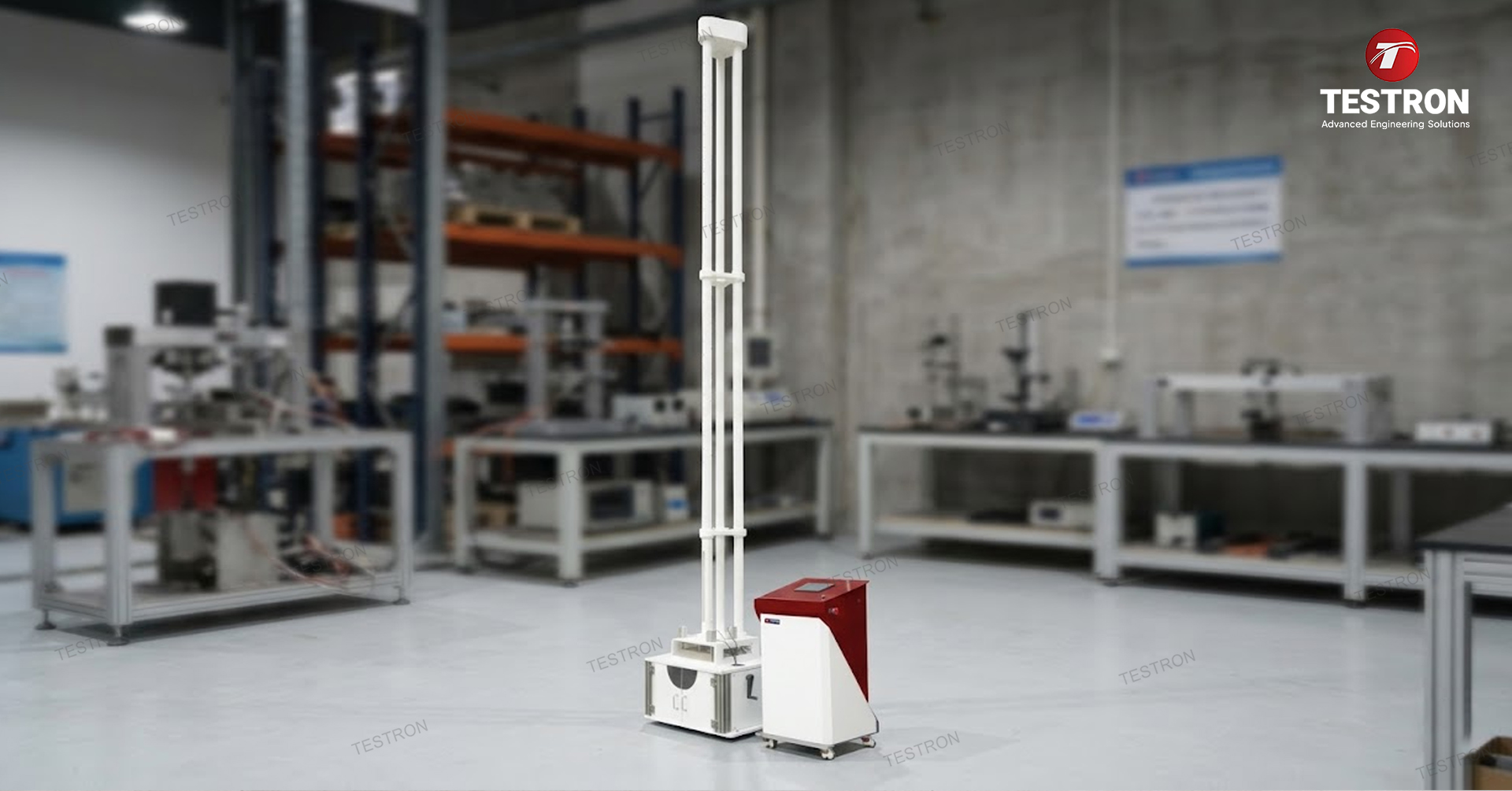
Testron TT-UL6 Falling Weight Impact Tester
To find the resistance to outside impacts for rigid PVC conduit systems, the Testron TT-UL6 Falling Weight Impact Tester can be used to measure the resistance of rigid PVC Schedule 40 and Schedule 80 conduits to external blows.
The current specifications for Testron’s products mention the ASTM D2444 and UL 651-Schedule 40 and 80 rigid PVC conduit.
Features of the Testron Drop Weight Impact Tester in the USA
- Color touch screen for settings
- Anti-bounce pneumatic system
- Height adjustment for impact
- Robust striker catching plate
- Polyurethane buffer
- Safety interlocks
- Special specimen holder
- Minimal friction in striker motion
Technical Specification of the Drop Weight Impact Tester in the USA
Parameters | TT-UL6 Specification |
Impact Height | 100 – 3350 mm |
Striker weight | 9.1 kg (Ø51) & 34 kg (Ø150) |
Test specimen OD | ½” to 6″ |
Control Unit | 550 x 650 x 1100 mm |
Frame | 800 x 650 x 4350 mm |
These specifications are derived from Testron’s existing product information for the TT-UL6 drop weight impact tester in the USA.
Are you sure that TT-UL6 is right for your test requirement?
Submit Your Testing Requirement for the Drop Weight Impact Tester
Applications of Drop Weight Impact Tester in the USA
The drop weight impact tester in the USA is widely known for use in thermoplastic pipe and conduit assessment.
Primary uses include:
Testing of PVC Pipe and Conduit
Assessing impact resistance in accordance with specified test conditions.
Impact Testing of HDPE Pipe
Helping to conduct quality control and development programs where such impact testing is required by the specification.
Thermoplastic Pipe Production
Material comparison and processing optimization.
Research & Development Laboratories for Pipes
Testing effect of changes in formulation and processing on impact properties.
Quality Control Laboratories
Reproducible impact tests on production specimens per method.
Selection of Drop Weight Impact Tester in the USA
While choosing a drop weight impact test device from a drop weight impact tester supplier, keep in mind the following:
1. Standard
Find out if your application needs ASTM, ISO, UL or some other specific standard.
2. Pipe Material
Decide on the kind of plastic material – PVC, PE, PP etc.
3. Diameter of Pipe
The diameter of the specimen along with its holder configuration would determine the choice of machine.
4. Striker
The specifications of the striker – mass, configuration and shape must tally with the standard test method.
5. Impact Height
The range of impact heights offered by the machine needs to be specified.
6. Safety
Find out whether there are any features that catch the striker and protect the chamber.
7. Installation & Technical Support
In the case of industrial laboratories, the installation process and technical support have also to be considered.
Price of Drop Weight Impact Tester in the USA
The drop weight impact tester price is dependent on the machine configuration instead of a single specification. When looking for a drop weight impact tester in the USA, cost varies by options.
Some factors that can influence the cost include:
- Specified test standard
- Diameter of pipe
- Impact height
- Striker configuration
- Degree of automation
- Safety
- Data acquisition needs
- Custom fixtures
- Installation & Training Needs
- Calibration
Rather than selecting a machine depending on the cost, the manufacturers must ensure that the correct test procedure and specimen specifications are known first.
Price Quote for a Drop Weight Impact Tester in the USA?
Submit:
Material of Pipe + Diameter of Pipe + Specified Standard + Application
Testron will quote the correct configuration for you.
Request for a Quotation
USA Installation: Testron TT-UL6 at National Pipe & Plastics
Testron’s TT-UL6 Falling Weight Impact Tester has been installed at National Pipe & Plastics in the USA.
The following installation case study describes the utilization of the machine to test impact properties of pipes according to the standards ASTM D2444 and UL 651, as well as training of equipment and post-sale services.
This kind of application is a good example of how falling weight impact testing may be integrated into a pipe production quality control process.
Case Study National Pipe & Plastics USA
Why Choose Testron for Pipe Impact Testing?
Testron Group offers material and pipe testing machines to manufacturers, labs, research centers and educational institutions.
For our clients who are looking for a Drop Weight Impact Tester in the USA, Testron can assist you with:
- Selection of the equipment according to the necessary application
- Machine adaptation to standards
- Technical advice
- Installation services
- Operator training
- Technical after-sales support
- Pipe testing lab solution
Pipe test machines from Testron also offer other equipment for essential tests, and thus help labs assemble a more comprehensive pipe testing machine suite.
Pipe Testing Laboratory Equipment from Testron
While impact resistance testing using a drop weight impact tester in the USA is just one facet of pipe testing quality, depending on the purpose of the pipe, your lab might need any of the following pieces of equipment alongside your drop weight impact test machine:
- Hydrostatic Pressure Tester
- Ring Stiffness Tester
- Universal Testing Machine
- Pipe Cutting and Chamfering Machine
- Carbon Black Content Tester
- Joint Leak Tightness Tester
- Environmental Stress Crack Tester
- Melt Flow Index Tester
Explore Pipe Testing Equipment
Conclusion
Drop Weight Impact Tester in the USA of Thermoplastics can be used in the United States to determine the impact resistance of thermoplastic pipe and fitting materials based on certain conditions. One of the most popular standards in the United States is ASTM D2444-25 for thermoplastic pipe and fittings, while an international standard is ISO 3127:1994 for determination of resistance to external blows of thermoplastic pipes.
To satisfy the requirements of rigid PVC conduit applications, a TT-UL6 Falling Weight Impact Tester of Testron Group can be used according to the requirements of ASTM D2444 and UL 651.
Thinking about purchasing a Drop Weight Impact Tester?
Send us your material, pipe diameter, required standard and testing requirements.
Get Your Quote From Testron Today
For more info, get in touch with us at info@testrongroup.com
Frequently Asked Questions
What is the difference between ASTM D2444 and ISO 6603-2 for drop weight impact testing?
ASTM D2444 is specifically designed for thermoplastic pipe and fittings, using the F50 method to determine statistical failure energy. ISO 6603-2 is a broader standard for flat rigid plastic specimens with instrumented force-displacement measurement. Both are valid depending on your product type, and Testron Group’s TT-UL6 supports both.
What drop weight impact tester price range should I budget for a compliant lab setup?
Entry-level manual testers for simple flat specimen testing start around $8,000–$15,000. Fully instrumented, multi-standard drop weight impact test machines with conditioning and software typically range from $25,000–$75,000 depending on energy capacity and automation level. Contact Testron Group for a custom quote based on your specific test requirements.
Can one machine handle both pipe testing (ASTM D2444) and flat specimen testing (ASTM D5420)?
Yes — the Testron Group TT-UL6 is designed with interchangeable fixtures and striker sets that allow rapid configuration between pipe and flat specimen testing. This dual capability eliminates the need for two separate machines.
Do I need an ISO 17025-accredited lab to use these standards?
Not necessarily. ASTM and ISO standards define the test method, not the accreditation of the lab. However, if your test certificates are used in regulatory submissions, client audits, or third-party quality programs, ISO 17025 accreditation significantly strengthens their credibility. Testron Group provides fully traceable calibration to support your accreditation process.
How often should a drop weight impact tester be calibrated?
Annual calibration is the industry standard for most labs. However, if the machine sees high-volume continuous use — common in large pipe manufacturing facilities in Texas or Ohio — semi-annual calibration is recommended. Calibration should always be performed after any major component replacement or incident (accidental overload, etc.).