Where to Buy an Ozone Resistance Test Chamber in the USA: Supplier Selection Guide for Rubber Testing Laboratories
When rubber and elastomeric items are subjected to ozone in the ambient environment, cracking, loss of flexibility, and degradation could take place. These could result in the reduced useful life of such products as seals, hoses, gaskets, tyres, cable insulators, roofing products, and many other rubber articles.
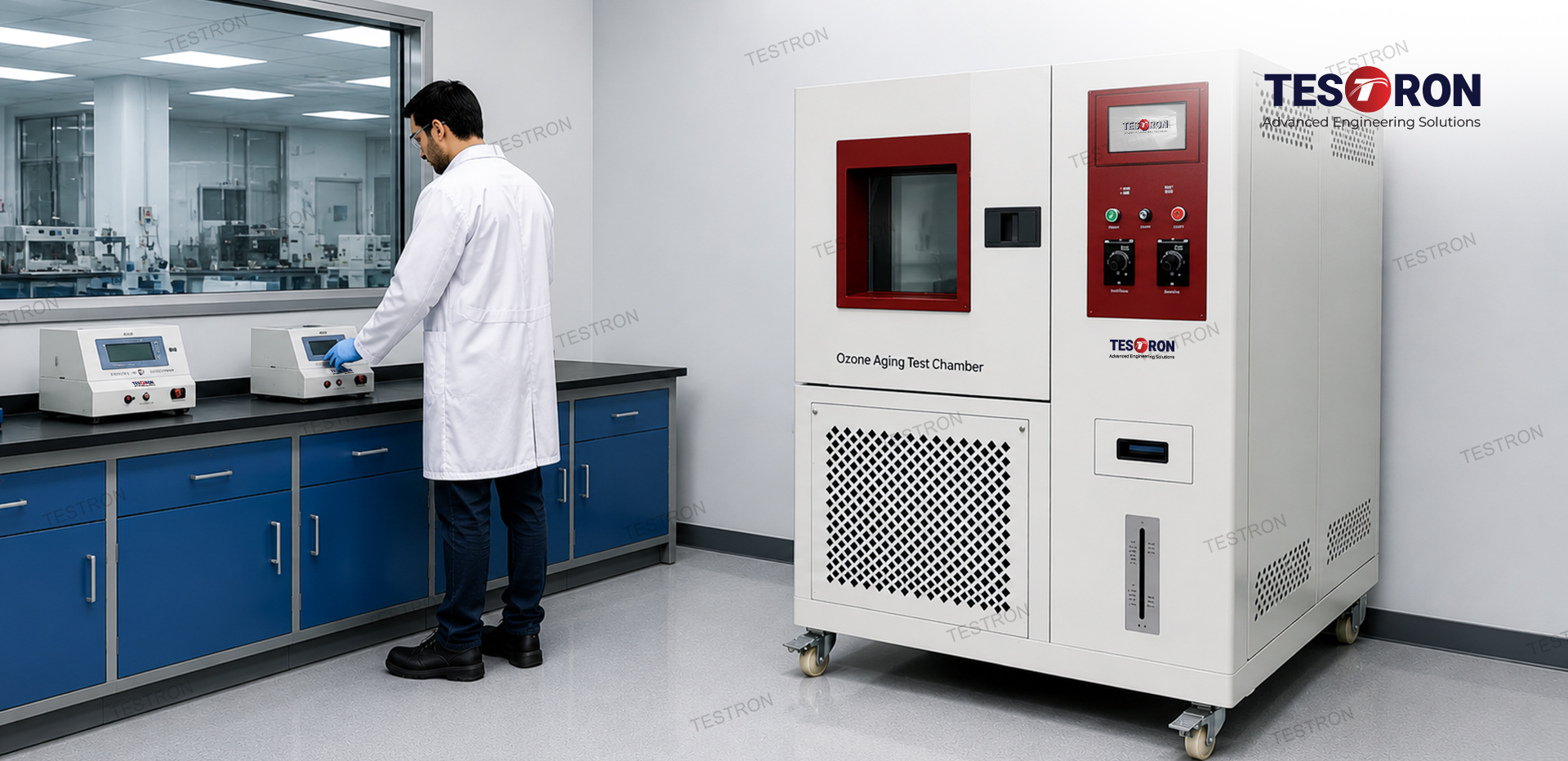
There is an ozone resistance test chamber in the USA available that enables laboratories to perform an ozone resistance test in a controlled manner at a specified temperature, humidity level, ozone concentration, and applied stress on the material sample.
But selecting the proper ozone resistance test chamber manufacturer is not just about comparing their respective prices for the equipment itself. There are other factors that laboratories in the USA and Canada should consider when investing in a reliable ozone test chamber.
Functions of an Ozone Test Chamber
An ozone test chamber produces an ozone atmosphere in a closed test environment. Rubber or elastomer materials are tested for a specified time period under controlled factors using an ozone testing chamber or ozone aging test chamber, such as:
- Ozone concentration
- Temperature of the chamber
- Relative humidity, if needed
- Time exposure
- Strain on the specimen, whether static or dynamic
- Air flow
Once the test process is completed, the specimens are inspected visually for any signs of cracking, degradation, embrittlement, or other damage.
An ozone aging test chamber is widely utilized for testing automobile rubber parts, industrial seals, medical tubing, electrical cable insulation, building materials, adhesives, polymers, and consumer rubber goods.
Industries Which Need Ozone Resistance Test Chamber in the USA
A durable ozone test machine or ozone tester can assist quality control, development, and selection processes in various industries.
Auto industry laboratories use an ozone resistance test chamber in the USA for testing tyres, hoses, door seals, engine parts, gaskets, and weatherstripping. The cable industry tests rubber insulation and outer covers using advanced ozone test equipment. Roofing membrane producers test construction materials, sealants, and insulators using a dedicated ozone chamber.
Moreover, it is beneficial to use an ozone test instrument for polymer producers, educational institutions, testing laboratories, aerospace companies, medical goods manufacturers, and research institutions.
For all of these institutions, the ozone resistance testing chamber will become a useful testing machine among others in an environmental testing laboratory.
Considering the Design of a Rubber Testing Laboratory?
Consult the Testron Group on the following issues related to capacity, ozone concentration, holder type, standards, installation requirements, and configurations suitable for USA/Canada laboratory needs.
How to Choose an Ozone Resistance Tester Chamber Manufacturer
1. Verify What Testing Standards Are Needed
Prior to soliciting quotations, define which testing methods are needed from your customers’ side, company’s quality control or the industry itself.
Standards commonly used for ozone resistance are ASTM D1149 rubber degradation and cracking due to exposure in ozone environment, ISO 1431 vulcanized or thermoplastic rubber, and ASTM D1171 rubber degradation due to outdoor weathering.
Inquire the ozone resistance test chamber manufacturer whether the ozone test equipment under consideration is able to meet all required ozone concentration, temperature range, motion of the specimens, strain of samples, time of testing, and reporting.
Don’t buy the instrument just because it is claimed to be standard compliant. Ask for a detailed written description of how it meets your particular testing method.
2. Assessing Ozone Concentration Control
Consistent ozone generation and measurement is critical for repeatable tests inside an ozone aging test chamber. The ozone chamber must be able to produce the necessary concentration and monitor this concentration continually through an ozone sensor.
The available ozone test chamber models by Testron have ozone concentrations ranging from 1 to 1000 pphm and temperatures ranging from 0°C to 100°C, with different-sized chambers.
When choosing suppliers, inquire about:
- Ozone generation method
- Accuracy of measurements
- Type of sensor and its lifetime
- Automatic control of concentration
- Frequency of calibration
- Alarm levels
- Recording interval
Inconsistent concentration levels in your ozone test machine could lead to inconsistent results and make batch-to-batch comparisons impossible.
3. Select the Appropriate Chamber Volume
The larger the chamber volume, the higher the price, energy expenditure, and laboratory space usage will be. The smaller chamber volume could limit the amount of samples which you can place there and further expansion of your research possibilities.
Consider the size of your specimens, quantity of the samples in a batch, space required between the samples, holder design, and anticipated future needs.
Testron can produce chambers of different volumes which have the following internal dimensions: from approximately 600×600×700mm to 1000×1000×1000mm.
The laboratories which test small seals will have different requirements than those which test long hoses, cable specimens or rubber parts.
4. Compare Static and Dynamic Specimen Holders
There are some testing procedures where rubber specimens are tested under constant elongation, whereas in other procedures repeated motion or strain is applied inside the ozone aging test chamber.
For successful completion of your testing, the ozone resistance testing chamber must accommodate the holder for your specimen type. The chamber designs by Testron Group include both static and dynamic holders, so you can create your own conditions of exposure.
Inquire about the holders’ availability, adjustability, corrosion resistance and compliance with the specimen size.
5. Consider Safety Features
Ozone is dangerous at high levels of concentration, so chamber containment, destruction, ventilation, and detection are critical purchasing factors for any ozone test chamber.
An effective environmental chamber for testing Ozone would feature safety features like:
- Locking door
- Ozone leak alarm
- Over-temperature control
- Ozone discharge control
- Activated carbon filter
- Fault system alarm
- Emergency shutdown control
The Testron ozone test instrument features an electromagnetic door lock, activated carbon filter, ozone leak alarm, fault system alarm, and ozone discharge control.
The laboratory also needs to determine its room ventilation capacity and comply with local occupational safety regulations before the purchase.
Request a Recommendation for a Technical Chamber
Provide Testron Group your test standard, test-piece dimensions, required ozone concentration range, workload per day, required voltage, and installation site to get a recommended chamber.
What Influences the Ozone Resistance Test Chamber Price and Cost?
The ozone test chamber price cannot be estimated based on the chamber size only. Depending on:
- Interior chamber dimensions
- Ozone concentration range
- Temperature and humidity control
- Static or dynamic holder types
- Functions of controller and logger
- Accuracy of the sensors
- Calibration certificates
- Safety and filtration systems
- Installation and commissioning
- Delivery to USA/Canada
- Training, warranty and support
While comparing the ozone resistance test chamber price, ask for quotations that specify what is included. For example, one quotation will cover everything including calibration, installation, holders and training whereas the other will include only the chamber itself.
The cheapest ozone resistance test chamber cost does not necessarily imply the lowest ownership cost. Sensor replacement, calibration, filters, service calls, consumables, downtimes and spare parts have to be taken into account.
Importance of Calibration and Documentation for Your Ozone Testing Chamber
Calibration is essential for ensuring that the measurement systems for ozone concentration, temperature, humidity, and other factors function within allowable limits inside your ozone aging test chamber.
Consult the ozone resistance test chamber manufacturer to know if the calibration certificate is traceable, which factors are being calibrated, the frequency of calibration, and the availability of local calibration services.
Essential documentation for an ozone test equipment purchase includes:
- User manual
- Electrical schematics
- Maintenance manual
- Calibration certificates
- Safety instructions
- Troubleshooting manual
- List of spare parts
- Installation specifications
Every Testron ozone test chamber comes supplied with a programmable touchscreen controller, Ethernet and USB interfaces, data logging facility, and calibration service.
Questions to Ask Prior to Ordering an Ozone Resistance Chamber in the USA
When selecting an ozone resistance test chamber supplier, ask these key questions:
- What standards can be applied with this chamber?
- What is the guaranteed range and accuracy of ozone control?
- Are static and dynamic holders provided?
- What calibration documentation comes with the product?
- Is installation and operator training available?
- Are spare parts available in the USA and Canada?
- What kind of warranty and technical support services are offered?
- What are the power, ventilation, and room requirements?
- Does the controller have test data exporting capabilities?
- What would be the delivery and commissioning process?
A reputable vendor should provide technical answers rather than just send a general catalogue and prices.
Why Look into the Testron Group?
Testron Group manufactures ozone testing chambers for rubber, elastomers, cables, automobiles, buildings, research, and quality control laboratories.
Available options for every ozone test chamber include automatic ozone regulation, touch screen programming, USB/Ethernet connectivity, dynamic/static sample holders, safety locks, alarms, data logging, activated carbon filtration, and various chamber volumes.
The chamber may be incorporated into an environmental test chamber laboratory along with other testing chambers such as temperature/humidity, UV weathering, salt spray, thermal shock, and other material testing instruments.
Request a Quotation for the Ozone Test Chamber
Testron Group will provide you with the updated quotation on the ozone resistance test chamber price, technical specification sheet, configuration, shipping, installation and quotation in the USA or Canada.
Conclusion
When purchasing an ozone resistance test chamber in the USA, it is important not to focus only on the price. The laboratory should consider factors such as compliance with the standards, ozone stability, chamber capacity, specimen holders, safety system, calibration, documentation, service, and total ownership cost.
The right ozone resistance test chamber in the USA choice will assist rubber testing laboratories to produce reproducible results, detect deficiencies, refine the rubber compound formula, increase resistance, and prove product reliability.
Also, working with the experienced ozone resistance test chamber manufacturer will help your laboratory to get proper application guidance and installation assistance.
For more info, get in touch with us at info@testrongroup.com
Frequently Asked Questions
What types of samples are suitable to be tested in ozone test chambers?
An ozone test chamber is used to assess rubber, elastomer, cable insulation, seals, hose, gasket, roofing membrane, polymer compounds, adhesive, and many other materials which could be deteriorated due to the ozone exposure.
What does the ozone resistance test chamber price cost in the USA?
The cost depends on the volume of the test chamber, its capability of ozone generation, temperature and humidity control, sample holders, calibration, safety devices, automation, transport, installation, and guarantee. It is necessary to make a technical offer in order to receive an appropriate price.
What is the difference between static and dynamic ozone tests?
A static test, the sample is exposed to ozone at a definite elongation. Dynamic tests require repeated stretching or moving of the sample during ozone exposure. Both options depend on the type of material and standards.
What are ozone resistance test standards?
Ozone resistance tests are usually compliance with standards like ASTM D1149, ISO 1431, and ASTM D1171. The chosen version of the standard and the test conditions should be specified prior to conducting the test.
Do you need any special laboratory preparation for the ozone test chamber?
The chamber might need proper electricity, ventilation, space, environment, exhaust from the ozone, and safety for the operators. The installation prerequisites must be checked from the manufacturer before shipment.