


Walk-In Climate Chamber Installation Guide in the USA: Site Requirements, Power Setup & Safety Considerations
Summary
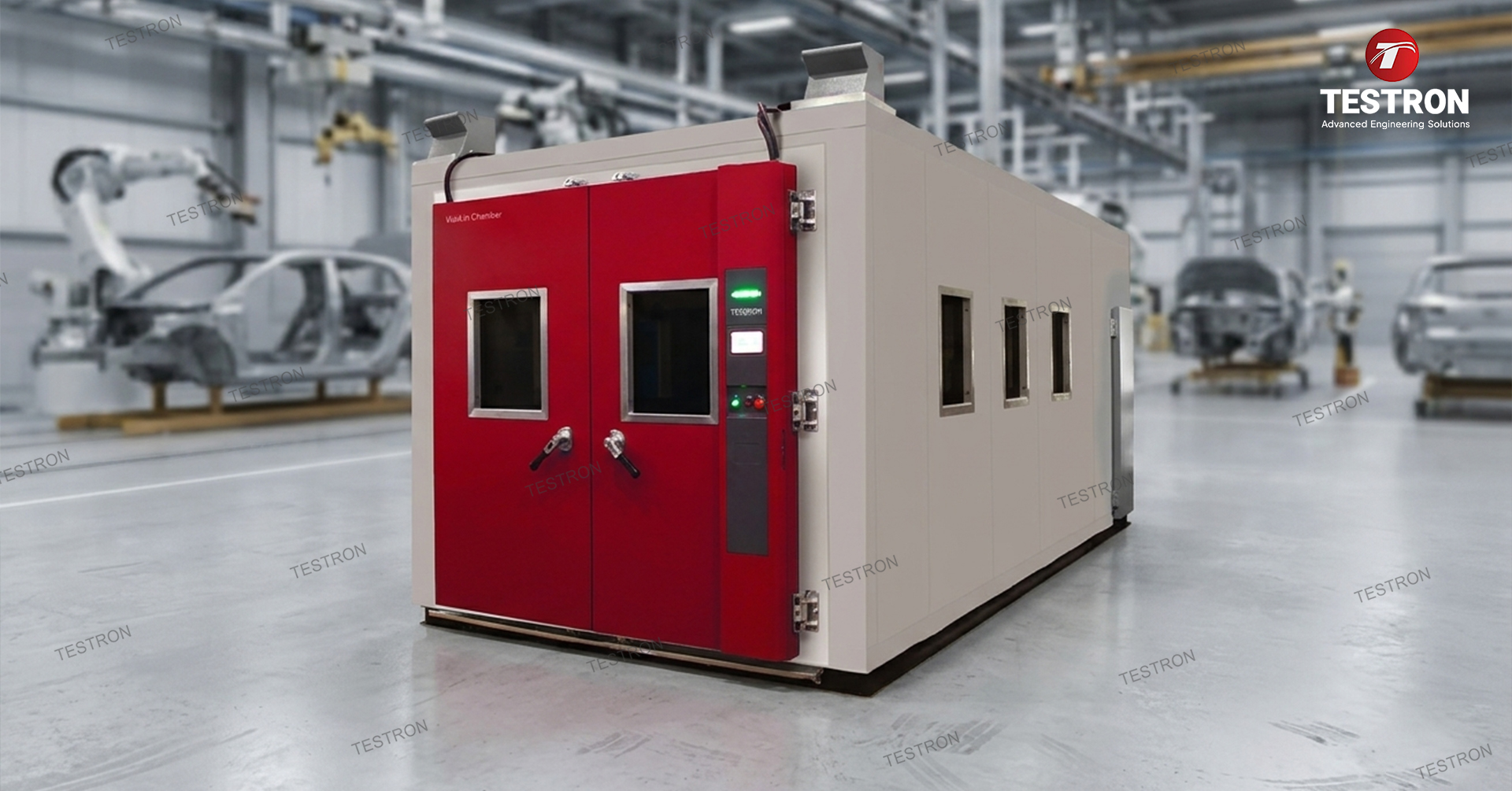
Installing a walk-in climate chamber in the USA is a significant infrastructure investment that demands careful planning well before the equipment arrives on site. From floor load capacity and ceiling clearance to three-phase power setup and ventilation safety, every detail of your site preparation directly affects walk-in environmental test chamber performance, operator safety, and long-term reliability. This guide is written for engineers, facility managers, lab directors, and procurement heads who are planning a walk-in environmental chamber installation and need a practical, technically grounded reference.
Testron Group, a leading walk-in climate chamber manufacturer and walk-in climate chamber supplier, has compiled this installation resource based on real-world deployment experience across laboratories and manufacturing facilities throughout the USA: including Houston, Chicago, New York, Los Angeles, and Dallas.
Introduction: Most Walk-In Chamber Problems Begin Before the Chamber Is Even Delivered
Most walk-in chamber problems begin before the chamber is even delivered. Here is a scenario that plays out more often than most procurement teams would like to admit: A facility invests in a high-specification walk-in climate chamber in the USA. The equipment arrives on schedule. Then the installation team discovers the floor cannot handle the load rating, the electrical panel needs a full upgrade, and the HVAC system in the room is completely incompatible with the heat rejection requirements of the walk-in climatic chamber.
The result? Delays. Extra costs. A frustrated engineering team. And a walk-in test chamber sitting idle while site remediation work catches up.
This situation is entirely avoidable. With the right pre-installation planning, a walk-in environmental test chamber installation can proceed smoothly, on schedule, and within budget. Whether you are setting up a walk-in stability chamber for pharmaceutical storage, a walk-in thermal chamber for aerospace component qualification, or a large walk-in test chamber for electronics environmental simulation, the site preparation fundamentals are consistent.
This guide covers everything your team needs to know: site requirements, structural considerations, power setup, safety planning, and practical tips from Testron Group‘s deployment experience with the walk-in climate chamber in the USA.
Understanding What a Walk-In Climate Chamber Actually Requires From Your Facility
Before diving into specific requirements, it is important to understand why a walk-in climate chamber in the USA places such demanding requirements on the host facility. Unlike benchtop models, a walk-in environmental test chamber is a large, self-contained climatic system that generates significant mechanical and thermal loads, consumes substantial electrical power, and requires dedicated space for both the chamber body and its supporting mechanical systems.
The chamber itself houses powerful refrigeration compressors, heating elements, humidity generation systems, and air circulation equipment :all of which must operate continuously, often for weeks or months at a time, under tightly controlled conditions. The facility must be prepared to support all of these systems reliably.
Getting this right from the start is what separates a smooth installation from a costly, disruptive one.
Site Selection – Choosing the Right Location for Your Walk-In Climate Chamber
Floor Space and Chamber Footprint
The most obvious starting point is floor space. A walk-in climate chamber in the USA requires not just the chamber footprint itself but additional clearance on all sides for:
- Mechanical equipment access (compressors, condensers, control panels)
- Maintenance and service access (minimum 36 inches on service sides)
- Air circulation around the condenser unit
- Cable and utility routing
As a practical rule for any walk-in environmental chamber, allow at least 24 to 36 inches of clearance on all non-wall sides. For a walk-in climatic chamber with external condensing units, additional outdoor or roof-mounted space may be required for heat rejection equipment.
Key space planning checklist:
- Confirm chamber external dimensions including mechanical enclosures
- Map cable runs from power panel to chamber location
- Identify condenser unit placement (indoor or outdoor)
- Confirm forklift or rigging access route for delivery and positioning
- Account for door swing clearance on both chamber and facility doors
Ceiling Height Requirements
Walk-in climate chambers, particularly larger walk-in thermal chambers and walk-in stability chambers, require minimum ceiling heights that accommodate both the chamber body and overhead mechanical components. Typical minimum clearances range from 12 to 16 feet for large walk-in test chamber configurations, though smaller walk-in chambers may work in lower-ceiling environments.
Always confirm ceiling height requirements with your walk-in climate chamber manufacturer before finalizing your site selection.
Floor Load Capacity
This is one of the most commonly underestimated site requirements for a walk-in climate chamber in the USA. A fully equipped walk-in environmental test chamber can impose floor loads well beyond standard ratings, particularly when product loading is considered.
Concrete floor load ratings should be verified by a structural engineer for chambers exceeding 5,000 lbs in equipment weight, and test product loading should be factored into the calculation separately. In facilities across Houston, Dallas, and Chicago, Testron Group’s installation teams have encountered situations where floor reinforcement was required before chamber positioning could proceed.
Typical floor load considerations:
- Chamber structural base weight
- Refrigeration and mechanical system weight
- Maximum product or specimen load weight
- Dynamic load from compressor vibration
Planning a walk-in climate chamber installation? Request a Quote from Testron Group today :our application engineers will provide a complete site requirements document specific to your selected chamber configuration.
Structural and Environmental Site Requirements for a Walk-In Climatic Chamber
Flooring Surface and Levelness
The walk-in climatic chamber installation surface must be flat, level, and free of surface irregularities. Most walk-in climate test chamber installations require floor levelness within ±0.25 inches across the walk-in test chamber footprint. Uneven floors create door sealing problems, condensate drainage issues, and mechanical stress on the walk-in thermal chamber structure over time.
Epoxy-coated concrete is the preferred flooring substrate. Raised flooring systems may require engineering evaluation before chamber installation proceeds.
Ambient Temperature Range of the Installation Room
The room housing the walk-in environmental chamber must maintain an ambient temperature compatible with the chamber’s refrigeration system performance. Most walk-in climate chamber manufacturer guidelines specify a maximum ambient operating temperature of 95°F (35°C) for the mechanical system. In facilities located in warmer climates, HVAC capacity must be verified to handle heat rejection from the walk-in climatic chamber’s condenser system during peak summer operation.
Humidity Control in the Surrounding Space
For walk-in stability chambers running low-humidity or dry heat programs, the ambient humidity in the installation room can affect chamber performance if the facility environment is excessively humid. Coastal facilities in New York and Los Angeles should evaluate ambient RH levels during planning for a walk-in climate chamber in the USA.
Vibration Isolation
Walk-in thermal chambers and walk-in environmental test chambers housing precision specimen testing programs may require vibration isolation pads under the walk-in testing chamber base to prevent compressor vibration from interfering with test results or transmitting to adjacent equipment.
Power Setup for a Walk-In Climate Chamber in the USA
Power setup is the most technically complex aspect of walk-in climate chamber installation, and it is the area where under-specification creates the most serious operational problems.
Three-Phase Power Requirements
Virtually all commercial and industrial walk-in environmental chambers in the USA operate on three-phase electrical power. Standard configurations for a walk-in thermal chamber in the USA are:
- 208V / 3-phase / 60Hz :common in commercial buildings
- 460V / 3-phase / 60Hz :common in industrial facilities
- 480V / 3-phase / 60Hz :standard in heavy industrial environments
Confirm your facility’s available voltage and phase configuration before finalizing equipment specifications with your walk-in climate chamber manufacturer. Mismatched voltage is not field-correctable without transformer installation.
Circuit Amperage and Dedicated Circuit Requirements
A walk-in climate chamber in the USA requires a dedicated electrical circuit. Amperage requirements vary significantly with the walk-in test chamber size and capability:
Chamber Size | Approximate FLA | Recommended Breaker |
Small Walk-In (< 100 cu ft) | 30–50A | 60A dedicated |
Medium Walk-In (100–500 cu ft) | 50–100A | 125A dedicated |
Large Walk-In (500–1000 cu ft) | 100–200A | 250A dedicated |
Extra-Large Walk-In (> 1000 cu ft) | 200A+ | Per engineer spec |
Electrical Panel Upgrades
In older facilities—particularly in New York and Chicago—the existing electrical panel may not have sufficient capacity for a walk-in climate chamber addition. A licensed electrician should conduct a load assessment of the existing panel well in advance of the delivery date.
Allow 4 to 8 weeks for electrical panel upgrades in most USA municipalities, as permit processing timelines vary.
Grounding Requirements
Proper equipment grounding is mandatory for walk-in environmental test chambers. A dedicated ground conductor must be run with the supply circuit. This is not optional :improper grounding creates both safety hazards and measurement errors in chambers used for sensitive electronic device testing.
Uninterruptible Power Supply Considerations
For walk-in stability chambers running pharmaceutical, regulatory, or long-duration environmental programs, an uninterruptible power supply (UPS) or generator backup should be evaluated. A power interruption during a stability study can invalidate months of test data and trigger regulatory reporting requirements.
Unsure about your facility’s power compatibility with a walk-in climate chamber in the USA? Talk to Our Experts at Testron Group :our electrical engineering support team will review your panel specifications and provide detailed power requirement documentation before you commit to an installation plan.
Plumbing and Utility Requirements for a Walk-In Climate Chamber in the USA
Water Supply for Humidity Systems
Walk-in climate chambers running humidity programs—including walk-in stability chambers and walk-in climatic chambers—require a continuous, clean water supply for steam generation or ultrasonic humidification systems. Key requirements include:
- Deionized or distilled water supply strongly recommended
- Minimum supply pressure of 20–40 PSI depending on system
- Isolation valve within 6 feet of the chamber connection point
- Water hardness below 50 ppm to prevent scale buildup in humidifier components
Condensate Drainage
All walk-in environmental chambers produce condensate during cooling and dehumidification cycles. A floor drain or condensate pump system must be planned for the walk-in temperature chamber location. Minimum drain pipe diameter is typically 1 inch, sloped at ¼ inch per foot toward the drain point.
In facilities without existing floor drains :a common situation in laboratory environments in Los Angeles and Dallas :a condensate pump with external drain routing may be required.
Safety Considerations for Walk-In Climate Chamber Installations
Refrigerant Safety and Ventilation
Modern walk-in environmental test chambers use HFC or HFO refrigerants. While these refrigerants are significantly safer than legacy CFC and HCFC compounds, refrigerant leak events in enclosed spaces still require adequate ventilation.
The room housing a walk-in climate chamber in the USA must have mechanical ventilation capable of maintaining safe ambient air quality in the event of a minor refrigerant leak. ASHRAE Standard 15 provides the reference framework for refrigerant ventilation calculations.
Emergency Exit and Entry Safety for Walk-In Chambers
This is one of the most critical safety requirements unique to walk-in chamber configurations. Every walk-in climatic chamber must be equipped with:
- Interior emergency door release :operable from inside without tools under any temperature condition
- Interior emergency lighting :active independently of chamber power
- Exterior visual and audible alarm :triggered by the interior emergency release
- Observation window :allows personnel outside to monitor chamber interior
In the USA, OSHA regulations require that any walk-in chamber large enough for personnel entry must meet confined space entry and egress standards applicable to the facility’s industry classification.
Over-Temperature Protection
Independent over-temperature protection :separate from the primary temperature controller :is mandatory on all walk-in thermal chambers and walk-in environmental test chambers. This system must cut chamber heating independently if the primary control system fails.
Never operate a walk-in climate chamber without a verified, calibrated over-temperature cutout.
Electrical Safety and Lockout/Tagout
All maintenance procedures on an environmental chamber must follow OSHA-compliant Lockout/Tagout (LOTO) procedures. Dedicated lockout points should be identified, labeled, and documented in the facility’s LOTO program before the chamber enters service.
Signage and Access Control
Walk-in test chambers should have clearly posted signage covering:
- Maximum product load capacity
- Operating temperature and humidity ranges
- Emergency contact information
- Entry hazard warnings (cryogenic, thermal, or oxygen-displacement risks as applicable)
Have more questions about walk-in climate chamber in the USA installation requirements? Request a Quote and our engineering team will respond within one business day.
Final Word: Get Your Walk-In Climate Chamber Installation Right the First Time
A walk-in climate chamber in the USA is one of the most impactful investments a testing laboratory or manufacturing facility can make. It expands your environmental simulation capability, strengthens your quality program, and positions your team to handle the most demanding product qualification requirements across aerospace, pharmaceutical, electronics, automotive, and defense sectors.
But the investment only delivers its full value when the installation is executed correctly. Every site requirement missed, every power specification underestimated, and every safety system overlooked adds cost, delays, and operational risk to your program.
Testron Group is the walk-in climate chamber manufacturer and supplier that engineering teams across Houston, Chicago, New York, Los Angeles, and Dallas trust to get this right. From initial specification and site assessment through delivery, installation, commissioning, and ongoing support, we are with you at every step.
Do not leave your walk-in chamber installation to chance. Contact Testron Group today and let our experts guide your site preparation, power planning, and safety compliance for your walk-in climate chamber in the USA from day one.
Get Custom Solutions :Reach out to Testron Group now to discuss your walk-in climate chamber in the USA requirements, get a detailed walk-in climate chamber cost and configuration quote, and start your installation planning with the industry’s most experienced environmental chamber team.
For more info, get in touch with us at info@testrongroup.com
Frequently Asked Questions
What is the typical installation timeline for a walk-in climate chamber in the USA?
Installation timelines typically range from 2 to 6 weeks after delivery, depending on site readiness, electrical panel work, and plumbing requirements. Facilities that complete pre-installation site preparation :including electrical upgrades and floor assessment :before chamber delivery consistently achieve faster commissioning timelines. Contact Testron Group for a project-specific installation timeline estimate.
What is the walk-in climate chamber price range for USA buyers?
Walk-in climate chamber price varies significantly based on interior volume, temperature and humidity range, humidity system type, control system specification, and optional features such as data logging, high pressure operation, and specimen pass-through ports. Testron Group provides transparent, detailed walk-in climate chamber cost quotations matched to your specific application. Request a Quote for an accurate price assessment.
Does Testron Group provide site assessment support before walk-in chamber installation?
Yes. Testron Group’s technical team provides pre-installation site assessment support including site requirement documentation, electrical specification sheets, structural load data, and utility connection guidance. This service is available for buyers across the USA, including Houston, Chicago, New York, Los Angeles, and Dallas.
What safety features are mandatory on a walk-in climate chamber in the USA?
Mandatory safety features include an interior emergency door release, interior emergency lighting, exterior alarm system, independent over-temperature cutout, and adequate refrigerant ventilation in the installation room. Walk-in chambers used for personnel entry must also comply with applicable OSHA confined space regulations.
Can a walk-in stability chamber be installed in a facility without an existing floor drain?
Yes, but a condensate pump system with external drain routing must be installed. Testron Group can specify the appropriate condensate management solution for facilities without floor drains. This is a common requirement in laboratory environments across Los Angeles and Dallas where floor drain infrastructure is limited.