Description
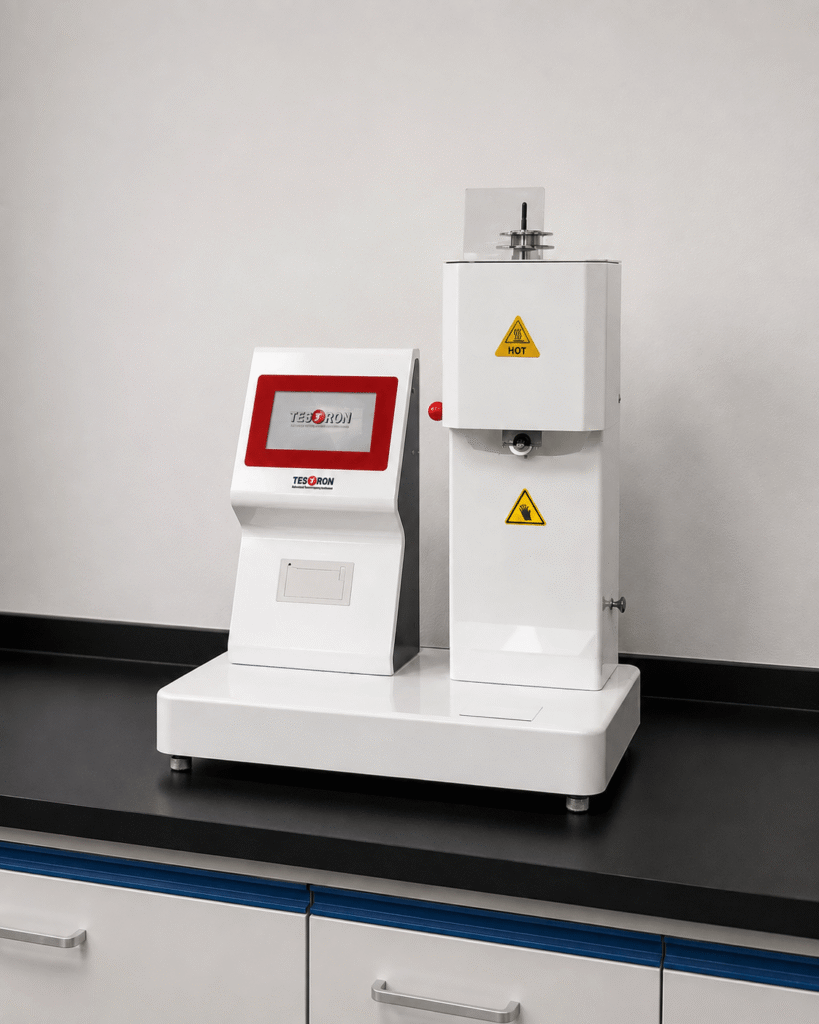
Why Melt Flow Index Testing Defines Polymer Quality
Every polymer processor knows the problem. A resin batch looks right on the certificate of analysis. The color matches. The density checks out. But the moment it hits the extruder or injection mold, the behavior is wrong — flow is too high, too low, or inconsistent across the run. Scrap rates climb. Cycle times extend. Customer deadlines slip.
In almost every case, the root cause traces back to a melt flow index that wasn’t measured accurately — or wasn’t measured at all before processing began.
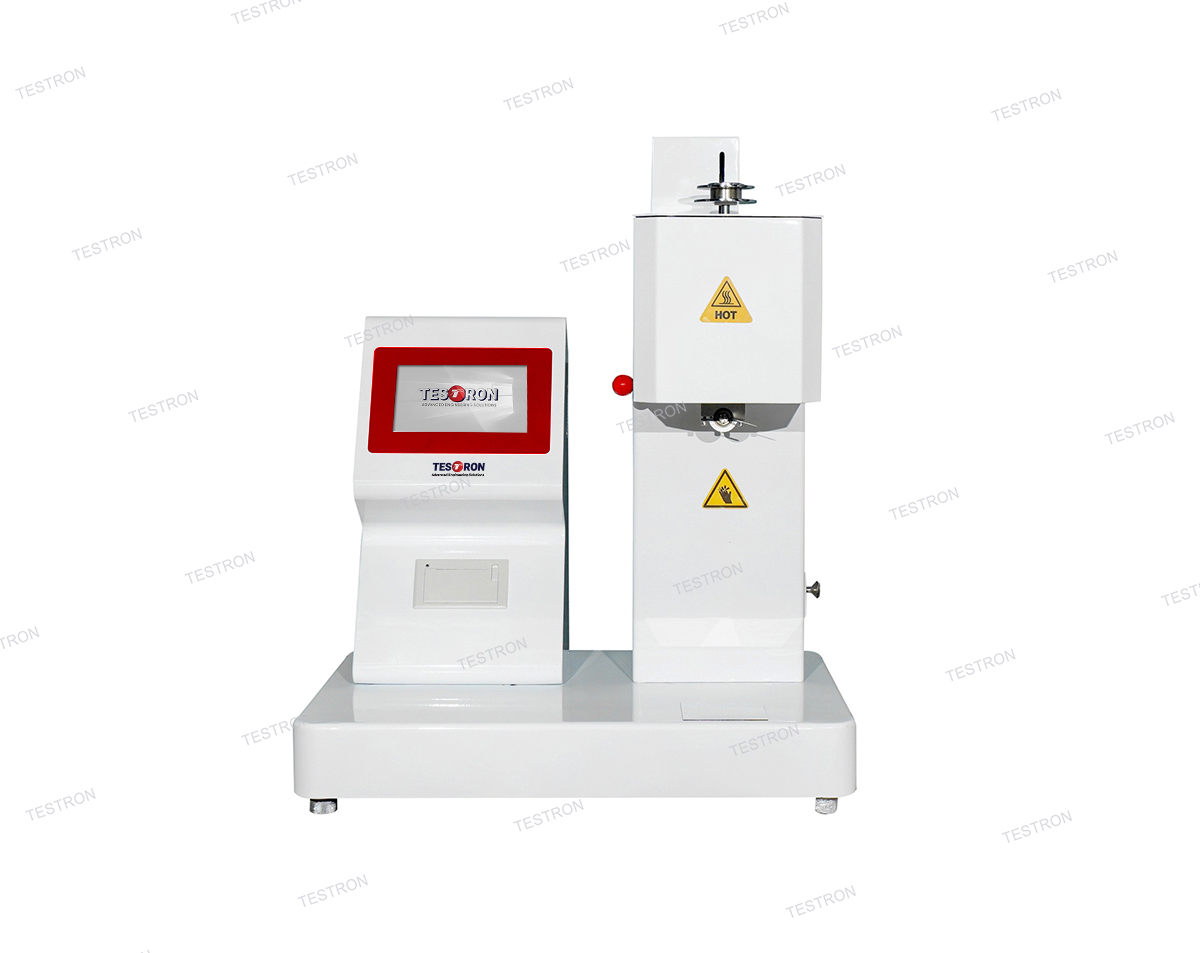
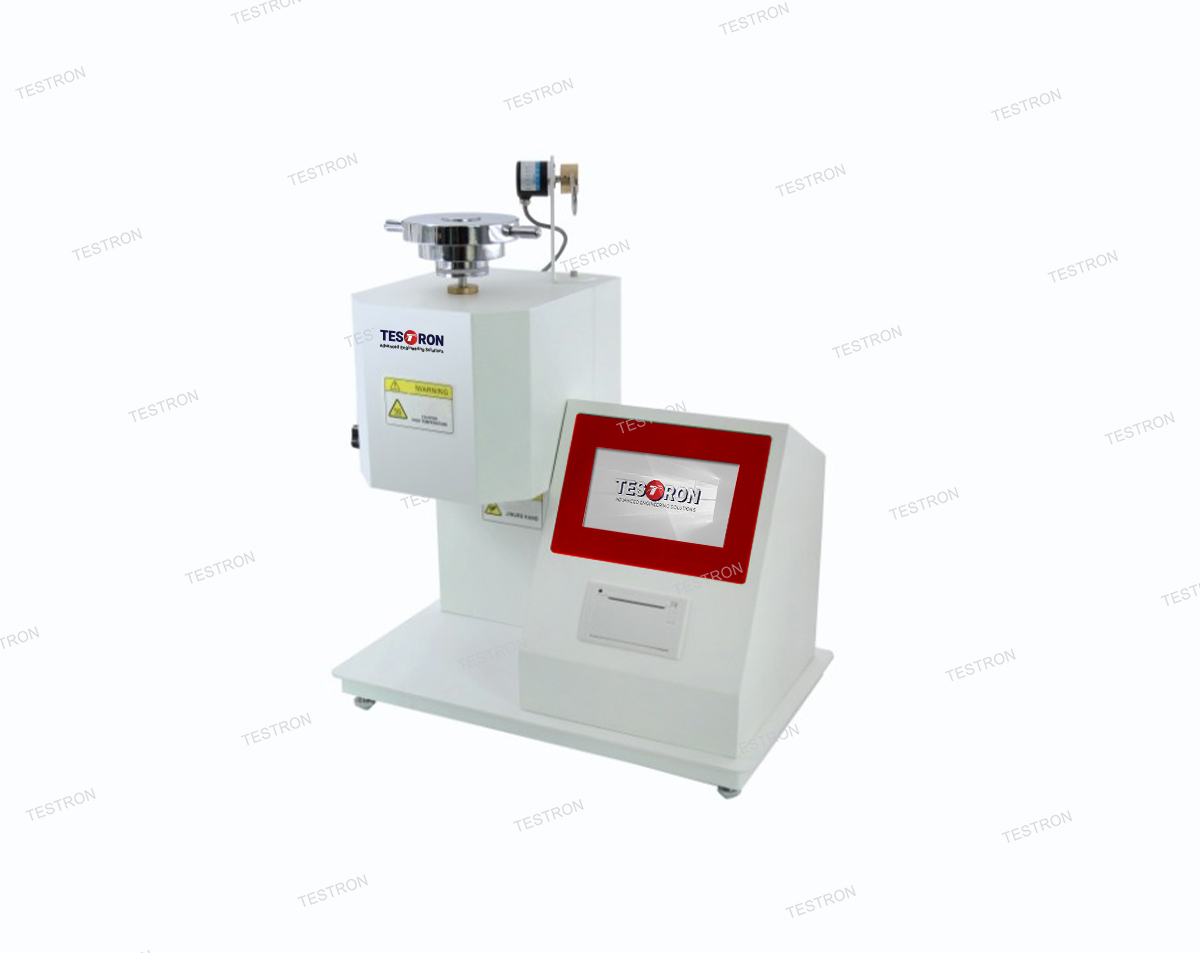
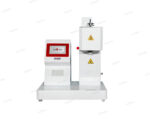
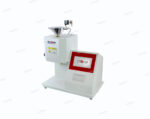
The TT-MFI 450D melt flow indexer in the USA exists to prevent exactly this scenario. By delivering fast, repeatable, standard-compliant melt flow index measurements directly on your production floor or in your quality lab, it gives polymer professionals the data they need to make material decisions before waste happens — not after.
Across the plastics industry in the USA, demand for reliable melt flow index testing equipment has grown steadily as supply chains diversify, recycled content requirements increase, and customer specifications tighten. The TT-MFI 450D melt flow index tester is Testron Group’s answer to that demand — a precision melt flow index instrument built for real-world production environments, not just research laboratories.
What Is the TT-MFI 450D Melt Flow Indexer in the USA?
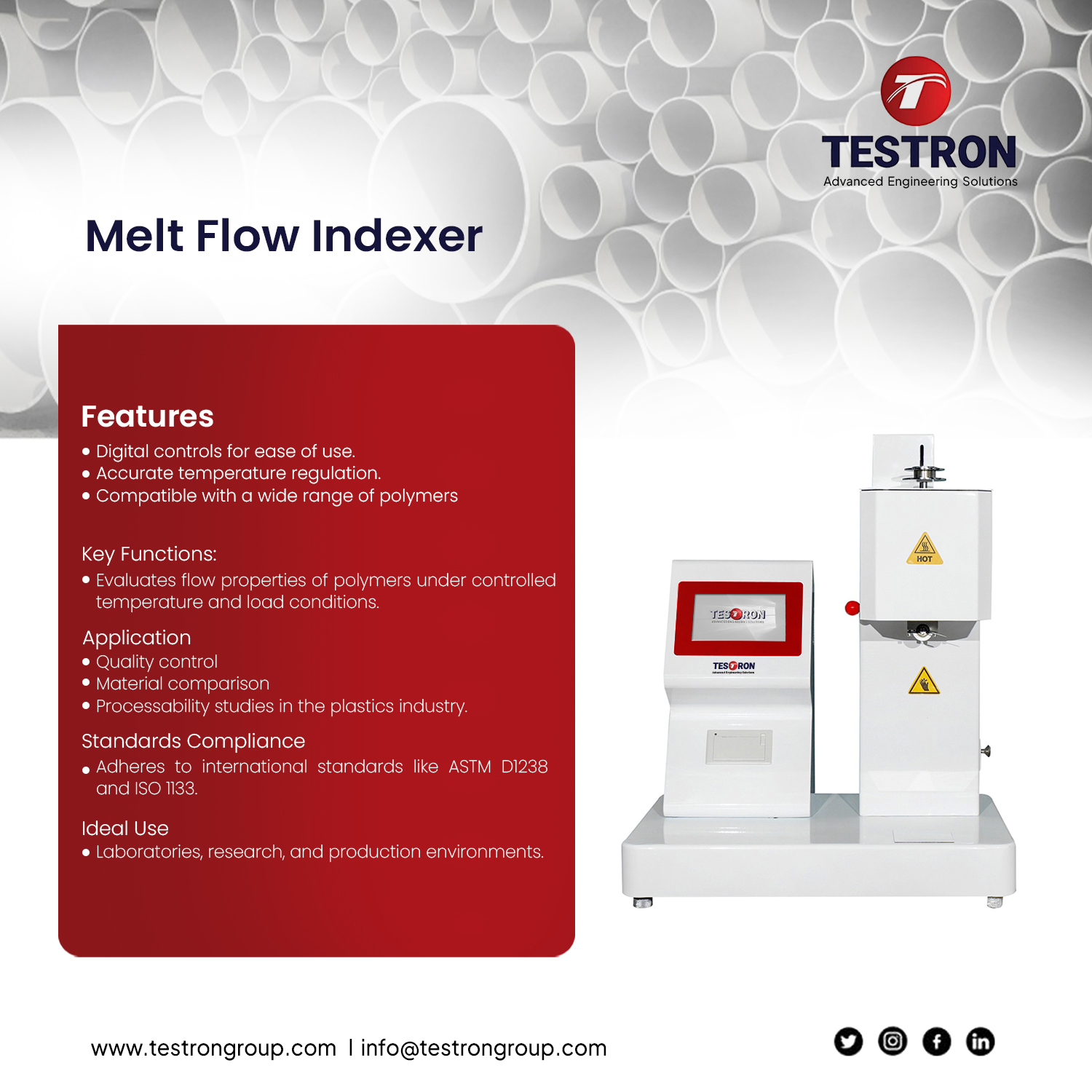
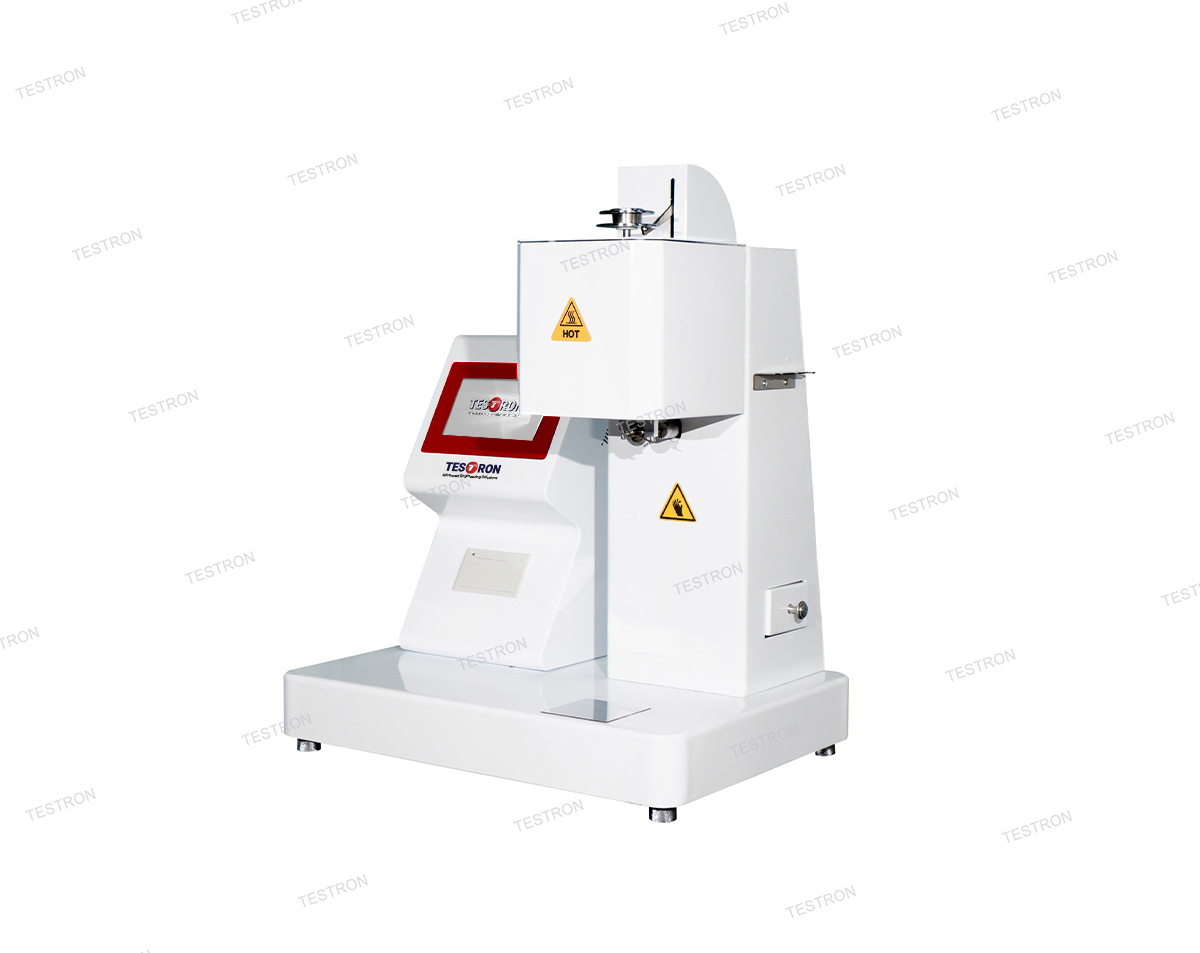
The TT-MFI 450D melt flow index Tester in the USA is a high-performance melt flow index apparatus designed to measure the melt mass flow rate (MFR) and melt volume flow rate (MVR) of thermoplastic polymers and elastomers under controlled temperature and load conditions.
In practical terms, it quantifies how easily a molten polymer flows through a standardized die orifice under a defined load — a measurement directly correlated to molecular weight, viscosity, and processability. This single number — the melt flow index of polymers — is one of the most widely used quality control parameters in plastics manufacturing worldwide.
The TT-MFI 450D is engineered for:
- Incoming material inspection — verify every resin batch before it enters your process
- In-process quality control — monitor consistency across production runs
- Formulation development — characterize new compounds and blends
- Recycled content validation — confirm post-consumer and post-industrial resin quality
- Competitor material benchmarking — compare alternative suppliers objectively
Whether you’re running polyethylene in a pipe extrusion plant in Houston, polypropylene in an injection molding facility in Chicago, or engineering resins in an R&D lab in Los Angeles, the TT-MFI 450D melt flow indexer in the USA delivers the accuracy and repeatability your quality program demands.
TT-MFI 450D Melt Flow Indexer: Working Principle
Understanding the melt flow indexer working principle is essential for anyone specifying or operating this class of melt flow index equipment.
The test follows this sequence:
Step 1
Barrel Preheating The precision-bored stainless steel barrel is heated to the test temperature specified by the applicable standard or material data sheet. The TT-MFI 450D maintains barrel temperature with a high-accuracy PID control system, achieving stability before any measurement begins.
Step 2
Sample Loading The polymer sample — typically pellets, granules, or powder — is charged into the heated barrel and allowed to preheat for a defined conditioning period (typically 5–10 minutes depending on the standard).
Step 3
Piston and Load Application A precision-machined piston is inserted into the barrel. The specified test load (from the standard test weight set) is applied to the top of the piston, driving the molten polymer toward the die orifice at the barrel base.
Step 4
Extrusion and Measurement For Method A (gravimetric/manual cut): Extrudate strands are cut at timed intervals and weighed. The MFR is calculated in grams per 10 minutes. For Method B (automatic/encoder-based): A precision optical encoder tracks piston displacement in real time, allowing automatic calculation of both MFR and MVR without manual cutting.
Step 5
Data Output Results are displayed on the digital controller, logged with test parameters, and available for export via USB or RS-232 to LIMS or laboratory data management systems.
This melt flow indexer working principle — deceptively simple in concept, demanding in precision engineering —is why melt flow index machine quality matters so fundamentally. Temperature uniformity across the barrel length, piston-to-bore clearance, die orifice dimensional accuracy, and load application consistency are all critical variables. The TT-MFI 450D is engineered to control every one of them.
Want to See the TT-MFI 450D Melt Flow Index Machine in Action? Talk to Testron Group’s Polymer Testing Experts Get application-specific guidance, pricing, and availability for the USA market.

TT-MFI 450D Technical Specifications
The 450°C upper temperature limit is a critical differentiator for advanced pipe testing equipment requirements. Most standard melt flow index machines top out at 400°C, which excludes high-performance engineering polymers. The TT-MFI 450D opens that range to include materials like PEEK, PPS, and high-temperature fluoropolymers — increasingly important for aerospace, medical, and electronics applications across the USA.
Parameter | Specification |
Temperature Range | Ambient to 450°C |
Temperature Accuracy | ±0.1°C |
Temperature Stability | ±0.2°C throughout test |
Test Loads Available | 0.325 kg to 21.6 kg (full standard weight set) |
Measurement Methods | Method A (manual cut) and Method B (automatic encoder) |
Die Orifice Dimensions | 2.095 ± 0.005 mm diameter, 8.000 ± 0.025 mm length |
Barrel Bore | 9.550 ± 0.007 mm |
Piston Material | Hardened stainless steel |
Display | Digital touchscreen controller |
Data Output | USB, RS-232 |
Standards Compliance | ISO 1133-1, ISO 1133-2, ASTM D1238, GB/T 3682 |
Power Supply | 220V/110V AC, 50/60 Hz |
Construction | Stainless steel barrel, precision CNC-machined components |
Melt Flow Indexer Standards: What the TT-MFI 450D Complies With
Melt flow indexer standards define exactly how tests must be conducted to produce comparable, defensible results. The TT-MFI 450D melt flow index equipment is designed and verified to comply with:
ISO 1133-1 — Plastics: determination of melt mass-flow rate (MFR) and melt volume-flow rate (MVR) of thermoplastics. The foundational international standard for MFI testing.
ISO 1133-2 — Specifically addresses materials sensitive to time-temperature history and moisture — critical for hygroscopic resins like nylon, PET, and polycarbonate.
ASTM D1238 — The primary USA standard for melt flow rate measurement, widely referenced by domestic OEMs, compounders, and resin producers.
GB/T 3682 — Chinese national standard, relevant for manufacturers operating in or supplying to Asia-Pacific markets.
Compliance with these melt flow indexer standards is not merely a purchasing checkbox. It is the foundation of data comparability across your supply chain — ensuring that your incoming material measurements align with your resin supplier’s certificates, your customer’s specifications, and third-party laboratory results.
Melt Flow Index of Polymers: Why It Matters for Your Process
The melt flow index of polymers is one of the most fundamental characterization parameters in plastics processing. Here’s why it matters at every stage:
Raw Material Incoming Inspection: Resin lots from different production batches — even from the same supplier — can vary in MFI. A shipment of polyethylene rated at 2 g/10 min that actually tests at 4 g/10 min will run differently through your extruder, potentially causing dimensional failures in finished pipe or film.
Process Optimization: Extrusion screw speed, injection pressure, melt temperature, and cooling time are all influenced by polymer flow properties. Knowing the precise melt flow index of polymers in each batch lets process engineers set parameters correctly the first time.
Quality Assurance and Release: Most OEM customers in automotive, packaging, and consumer goods specify MFI ranges in their material requirements. The melt flow index testing equipment must produce results traceable to the applicable standard for customer acceptance documentation.
Recycled and Blended Materials: Post-consumer and post-industrial recycled polymers show significant MFI variability — often far wider than virgin resins. Regular melt flow index testing of recycled feedstocks is essential for processors committed to sustainable manufacturing without sacrificing quality.
Polymer Degradation Detection: Elevated MFI relative to baseline can indicate polymer degradation from excessive heat history, UV exposure, or contamination. The TT-MFI 450D melt flow indexer in the USA provides a fast, sensitive degradation check without requiring complex rheological instruments.
TT-MFI 450D Melt Flow Indexer Applications: Industries Served Across the USA
The melt flow indexer applications for the TT-MFI 450D span virtually every sector of the plastics and polymer industry:
Plastics Compounding — Houston, Chicago, Dallas Compounders blending base resins with additives, fillers, and colorants use the melt flow index instrument to verify compound consistency across production batches and customer-specific formulations.
Injection Molding — Los Angeles, Detroit, Cincinnati Injection molders serving automotive, consumer electronics, and medical device industries test incoming resin MFI to set and validate process parameters, reducing scrap and cycle time variability.
Film and Sheet Extrusion — Dallas, Atlanta, Columbus Polyethylene and polypropylene film producers rely on melt flow index testing to maintain gauge control and mechanical property consistency across resin grades and production shifts.
Pipe and Profile Extrusion — Houston, Phoenix, Denver HDPE and PVC pipe manufacturers use the TT-MFI 450D to verify pressure-rated pipe resin compliance with ASTM and NSF standards before extrusion begins.
Blow Molding — Chicago, New York, Minneapolis HDPE and PET blow molders for packaging applications test incoming resins and regrind to maintain wall thickness uniformity and drop impact performance.
Automotive Plastics — Detroit, Nashville, San Antonio Tier-1 and Tier-2 automotive plastic component suppliers use the melt flow index testing machine for incoming inspection of structural polymers, interior trim materials, and under-hood components.
Recycling Operations — Nationwide Mechanical recyclers processing post-consumer PE, PP, and ABS characterize output stream quality using the TT-MFI 450D to meet end-market specifications for recycled pellet supply.
Academic and R&D Laboratories — New York, Boston, San Francisco University polymer science departments and corporate research labs use the melt flow index apparatus for polymer characterization, additive screening, and degradation studies.
Medical Device Manufacturing — Minneapolis, San Diego, Boston Medical grade polymer processors validate ISO 10993-compliant resins using the TT-MFI 450D to meet FDA submission documentation requirements.
Ready to Specify the Right Melt Flow Index Testing Equipment for Your Facility? Request a Custom Solution from Testron Group Our engineers will recommend the exact configuration for your polymer types, test standards, and throughput requirements.
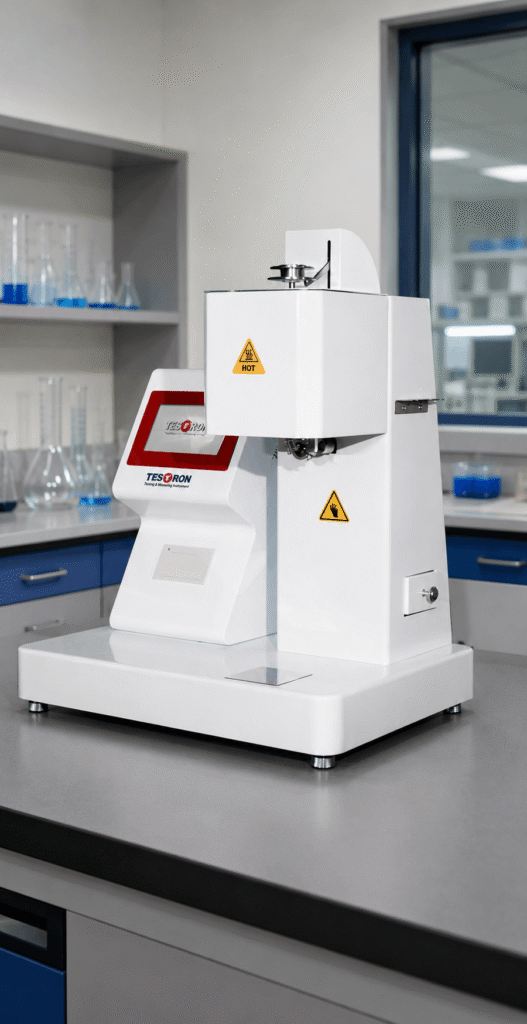
Key Features That Set the TT-MFI 450D Apart From Standard Melt Flow Index Equipment
Not all melt flow index equipment is engineered equally. Here’s what distinguishes the TT-MFI 450D from commodity alternatives in the USA market:
Extended Temperature Range to 450°C: Test PEEK, PPS, LCP, and other high-performance engineering polymers that exceed the range of standard 400°C instruments. This single capability opens the TT-MFI 450D to aerospace, medical, and high-reliability electronics applications that other instruments simply cannot serve.
Dual Method Capability: Full support for both ISO/ASTM Method A (gravimetric, manual cut) and Method B (automatic encoder displacement) in a single instrument. Switch between methods without hardware changes — a critical flexibility for labs running multiple polymer types and customer specifications.
±0.1°C Temperature Accuracy: Achieved through a precision PID controller and multiple-zone barrel heating design. Temperature accuracy at this level is directly correlated to MFI result reproducibility — a 1°C error at test temperature can shift MFI results by 3–8% for many common thermoplastics.
Precision-Machined Die and Barrel: CNC-machined to ISO 1133 dimensional tolerances, with surface finish specifications that minimize extrudate friction variability. Die and barrel dimensions are documented in the calibration certificate supplied with every instrument.
Full Digital Data Logging: Every test result is stored with test date, time, temperature, load, and operator ID. Data is exportable via USB for direct integration into quality management systems and customer documentation packages.
Hardened Stainless Steel Construction: Critical contact surfaces — barrel bore, piston, die — are manufactured from hardened stainless steel for long-term dimensional stability and resistance to abrasive filled compounds.
Compact Laboratory Footprint: Designed for benchtop installation in production QC labs where space is at a premium. Full-function instrument in a form factor that fits standard laboratory benches without special infrastructure.
Why Choose Testron Group as Your Melt Flow Indexer Manufacturer and Supplier in the USA
Selecting a melt flow indexer manufacturer or melt flow indexer supplier is about more than instrument specifications. It’s about the support infrastructure behind the equipment — and whether that partner will be there when you need calibration documentation for a customer audit, a replacement die assembly, or technical guidance on a new polymer testing application.
Testron Group brings:
Proven Global Deployment: Testron instruments are operating in manufacturing and laboratory environments across the USA, Middle East, Asia, and Europe. Our melt flow index testing equipment has been validated in demanding production environments, not just in controlled laboratory settings.
Standards-Aligned Engineering: Every TT-MFI 450D melt flow indexer in the USA is designed and verified against ISO 1133 and ASTM D1238 requirements — not approximated to them. Calibration certificates and compliance documentation are supplied as standard, not as paid extras.
Application Engineering Support: Our technical team understands polymer processing, not just instrument operation. When you ask about the right test temperature for a particular nylon grade, or how to handle a hygroscopic resin before testing, you get a substantive answer — not a referral to the user manual.
Competitive Melt Flow Indexer Price: The melt flow indexer price for the TT-MFI 450D reflects genuine engineering value — precision construction, extended temperature capability, dual-method operation, and full compliance documentation — at a price point designed to be accessible to mid-size manufacturers and production labs, not just Fortune 500 R&D centers.
Responsive US Market Support: Testron Group supports buyers across the USA with fast quotation response, documentation packages tailored to domestic customer requirements, and ongoing calibration and service support.
Melt Flow Indexer Price: Understanding the Investment
The melt flow indexer price for a quality instrument like the TT-MFI 450D melt flow indexer in the USA reflects several engineering and compliance factors that lower-cost alternatives routinely compromise:
| Cost Factor | Why It Matters |
| Temperature accuracy (±0.1°C) | Directly drives MFI result reproducibility |
| Die and barrel dimensional precision | Determines inter-instrument comparability |
| Dual Method A/B capability | Eliminates need for two separate instruments |
| 450°C upper temperature limit | Enables engineering polymer testing |
| Calibration certificate | Required for ISO 17025 and OEM audits |
| Data logging and export | Reduces documentation labor cost |
When total cost of ownership is calculated — including the cost of retesting, customer complaints, and failed audits from inaccurate MFI data — the TT-MFI 450D melt flow indexer in the USA consistently delivers a superior return on investment compared to budget alternatives.
Contact Testron Group directly for current melt flow indexer price information, volume pricing, and any applicable promotions for USA buyers.
Frequently Asked Questions
What polymers can the TT-MFI 450D melt flow index instrument test?
The TT-MFI 450D tests the full range of thermoplastic polymers and elastomers — including PE, PP, PS, ABS, PC, nylon, PET, POM, TPU, and high-temperature engineering polymers like PEEK and PPS up to 450°C. If a polymer has a defined MFI test condition in ISO 1133 or ASTM D1238, the TT-MFI 450D can run it.
What is the difference between Method A and Method B in melt flow index testing?
Method A (gravimetric) involves manually cutting extrudate strands at timed intervals and weighing them to calculate MFR in g/10 min. Method B (automatic) uses a displacement encoder to track piston movement and automatically calculates both MFR and MVR. Method B is faster, eliminates operator cutting error, and is required by ISO 1133-2 for certain sensitive polymers.
How often does the TT-MFI 450D require calibration?
Most quality management systems (ISO 9001, IATF 16949, ISO/IEC 17025) require annual calibration at minimum. High-utilization labs or those under formal accreditation typically calibrate every 6 months. Testron Group provides calibration support with traceable documentation to keep your instrument audit-ready.
Can the TT-MFI 450D test recycled and regrind polymers?
Yes. The TT-MFI 450D is fully suitable for testing recycled and regrind polymers. These materials often show higher MFI variability than virgin resins due to thermal history and contamination, making regular melt flow index testing of recycled feedstocks especially valuable for processors targeting consistent quality.
Is the TT-MFI 450D melt flow indexer compliant with both ISO and ASTM standards?
Yes. The TT-MFI 450D is designed and verified to comply with ISO 1133-1, ISO 1133-2, and ASTM D1238 simultaneously. Test results generated on the TT-MFI 450D are directly comparable to supplier certificates and customer specifications issued under either standard.
What support does Testron Group provide after purchase of the melt flow indexer in the USA?
Testron Group provides installation guidance, operator training documentation, calibration certificates, and ongoing technical support for all TT-MFI 450D instruments supplied in the USA. Replacement consumables — including die assemblies, pistons, and cleaning rods — are available directly from Testron Group to maintain instrument performance over its full service life.
Have more questions about the TT-MFI 450D? Request a Quote or Speak With Our Polymer Testing Experts Today
The TT-MFI 450D Melt Flow Indexer in the USA Sets the Standard for Polymer QC
Polymer quality control in the USA has never been more demanding. Supply chains are more complex. Customer specifications are tighter. Recycled content mandates are adding new variability to material streams. Regulatory documentation requirements are growing across automotive, medical, and packaging sectors alike.
In this environment, a melt flow index testing machine that delivers accurate, repeatable, standards-compliant results is not a luxury — it is a fundamental production tool. The TT-MFI 450D melt flow indexer in the USA is built to meet that standard, day in and day out, across the full range of thermoplastic polymers your facility processes.
From its 450°C operating range and dual-method capability to its precision-engineered barrel and die assembly and full digital data logging, the TT-MFI 450D represents the engineering investment that serious polymer manufacturers and quality labs in New York, Houston, Chicago, Los Angeles, and Dallas are making to stay ahead of customer requirements and competitive pressure.
Testron Group is ready to support your next melt flow index instrument purchase with expert guidance, competitive pricing, fast delivery, and the post-sale support your quality program depends on.
Visit testrongroup.com today. Request a quote, download product documentation, or speak directly with a polymer testing specialist. Your materials deserve the precision of the TT-MFI 450D — and your quality program deserves a partner who stands behind it.
Testron Group — Precision Material Testing Equipment for Polymer Professionals Across the USA