Description
What Is a Dichloromethane Resistance Tester in the USA?
A dichloromethane resistance tester : also referred to as a DCM tester or dichloromethane resistance testing machine : is a laboratory instrument designed to assess the resistance of thermoplastic pipe materials, particularly PVC and CPVC, to the chemical solvent dichloromethane (DCM), also known as methylene chloride.
The test works by immersing a prepared pipe specimen in dichloromethane at a controlled temperature for a defined period. The degree of surface attack : assessed visually or by dimensional change : indicates the level of molecular orientation and internal stress present in the pipe material. A well-processed, properly oriented pipe will show minimal surface degradation. A poorly processed pipe with inadequate molecular orientation will exhibit significant softening, swelling, or surface damage.
Why This Test Matter
The dichloromethane resistance test is fundamentally a quality indicator for the extrusion process. It reveals:
- Whether the pipe material has been correctly processed during extrusion
- The degree of molecular orientation in the pipe wall
- The presence of excessive residual stress from rapid cooling or poor die design
- Compliance with material and processing standards for PVC and CPVC pipes
Without a reliable dichloromethane resistance testing instrument, pipe manufacturers have no objective means of verifying that their extrusion process is producing pipe with the correct molecular structure : which directly affects long-term pressure performance and service life.
The Industry Challenge : Why DCM Testing Cannot Be Overlooked
Across the USA, PVC and CPVC pipe manufacturers supply products into markets where performance failure is simply not acceptable. Municipal water distribution systems, industrial process piping, fire suppression systems, and building services infrastructure all depend on pipe that performs to specification over decades of service.
Regulators, specifiers, and end customers increasingly require certified test data demonstrating dichloromethane resistance compliance. Manufacturers without proper dichloromethane resistance testing equipment face:
- Certification barriers : Inability to produce required test data for product approval
- Quality escapes : Poorly processed pipe reaching the market and failing prematurely in service
- Audit failures : Non-conformances raised during customer or third-party quality audits
- Competitive disadvantage : Buyers choosing suppliers with documented, certified test programs
Facilities in Dallas, Atlanta, Phoenix, Seattle, and New York that invest in proper DCM testing infrastructure consistently demonstrate stronger quality management systems and more robust customer confidence than those relying on visual inspection alone.
Testron Group’s dichloromethane resistance tester gives your facility the precise, repeatable testing capability needed to close this gap : and keep it closed.
Testron Group’s Dichloromethane Resistance Tester in the USA : Product Overview
Testron Group supplies dichloromethane resistance testing machines engineered for precision temperature control, chemical compatibility, safe operation, and full compliance with relevant international testing standards.
Our dichloromethane resistance testing equipment is designed with the practical realities of production quality control in mind : robust enough for daily use, precise enough for compliance testing, and straightforward enough for laboratory technicians to operate confidently.
Core Features of Testron Group’s Dichloromethane Resistance Tester in the USA
- Precise temperature control : Digital PID temperature controller maintains test temperature within tight tolerances throughout the test cycle
- Chemical-resistant construction : Wetted components manufactured from materials fully compatible with dichloromethane solvent to ensure instrument integrity and operator safety
- Sealed test chamber : Enclosed design minimizes solvent vapor exposure and ensures compliance with laboratory safety requirements
- Transparent observation window : Allows real-time visual monitoring of specimen condition during the test without opening the chamber
- Accurate temperature display : Clear digital readout for operator monitoring and test record documentation
- Timer function : Integrated test timer ensures consistent immersion duration across all specimens
- Safety interlocks : Temperature overprotection and vapor containment features as standard
- Compact bench-top design : Space-efficient footprint suitable for quality control laboratories and production floor installations
- Compliance-ready design : Engineered to support testing in accordance with ISO 9852, EN 580, ASTM, and related DCM resistance standards
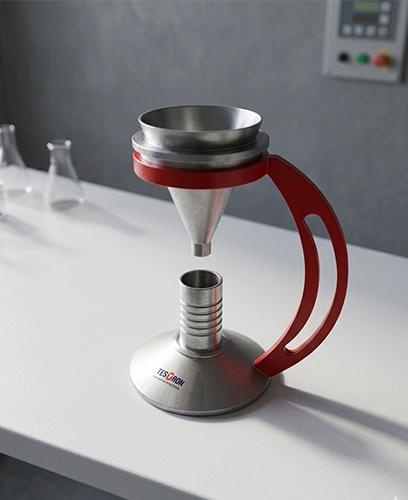
Technical Specifications : Dichloromethane Resistance Tester in USA
Specification | Standard Specification | Available Options |
Temperature Range | 15°C – 25°C (standard test temp) | Extended range configurations |
Temperature Stability | ±0.5°C | ±0.2°C precision models |
Temperature Control | Digital PID Controller | Programmable controller options |
Test Chamber Material | Chemical-resistant construction | Enhanced corrosion resistance |
Observation Window | Borosilicate glass / chemical-resistant | Standard across all models |
Timer | Digital integrated timer | Programmable multi-stage timer |
Safety Features | Overtemperature protection, vapor containment | Additional interlocks available |
Power Supply | 220V / 110V, 50/60 Hz | Custom electrical specifications |
Dimensions | Compact bench-top format | Custom configurations available |
Compliance Standards | ISO 9852, EN 580 | Additional standards on request |
Solvent Compatibility | Dichloromethane (DCM / Methylene Chloride) | Confirmed material compatibility |
Contact Testron Group for complete technical specifications matched to your testing standard and facility requirements.
Key Standards Supported by Testron Group's Dichloromethane Resistance Testing Equipment
Testron Group’s dichloromethane resistance tester is designed to support testing compliance with the following internationally recognized standards:
- ISO 9852 : Unplasticized polyvinyl chloride (UPVC) pipes for water supply : dichloromethane resistance at a specified temperature : test method and specification
- EN 580 : Plastics piping systems : unplasticized polyvinyl chloride (UPVC) : test method for the dichloromethane resistance of UPVC pipe
- ISO 1452 : Plastics piping systems for water supply and for buried and above-ground drainage and sewerage under pressure : UPVC requirements
- ASTM related standards : For US market compliance requirements relating to PVC and CPVC pipe quality
Compliance with these standards is a prerequisite for pipe manufacturers supplying public water infrastructure, building services, industrial process systems, and other regulated end-use markets across the USA.

Understanding the Dichloromethane Resistance Test Process
- Step 1 : Specimen Preparation
Pipe specimens are cut to the required length and the cut surfaces are prepared according to the test standard. Surface condition at the point of immersion must be consistent to ensure valid, comparable results.
- Step 2 : Temperature Conditioning
The dichloromethane solvent in the test chamber is brought to the specified test temperature : typically 15°C for standard UPVC testing : and stabilized within the required tolerance before immersion begins. This is where precise temperature control in the dichloromethane resistance testing machine becomes critical. Even small temperature deviations can produce significantly different test outcomes.
- Step 3 : Specimen Immersion
The prepared pipe specimen is immersed in the dichloromethane at the controlled temperature for the specified duration : typically 30 minutes for standard compliance testing. The observation window allows continuous visual monitoring without disturbing the test environment.
- Step 4 : Assessment
After immersion, the specimen is removed and assessed for surface condition. The degree of attack is classified according to the test standard : from no visible effect through to significant softening or dissolution. Results are recorded and compared against the acceptance criteria defined in the relevant product standard.
- Step 5 : Documentation
Test results are documented with temperature records, immersion time, and assessment outcome : creating the audit trail required for quality management systems and certification purposes.
Why Precision Matters in Dichloromethane Resistance Testing
Temperature is the single most critical variable in dichloromethane resistance testing. The solvent’s attack rate on PVC materials is highly temperature-sensitive : a difference of just 1°C or 2°C can shift a passing result to a failing result, or mask a genuine quality problem.
This is why Testron Group’s dichloromethane resistance tester is built around a high-quality digital PID temperature control system with verified stability and uniformity throughout the test chamber volume. It is not sufficient to control the temperature at a single point : the entire immersion volume must be maintained within tolerance throughout the full test duration.
Laboratories and quality control departments in New York, Houston, Chicago, and Los Angeles that have upgraded from basic cooling baths to properly specified dichloromethane resistance testing equipment consistently report:
- More consistent test results with lower inter-operator variability
- Greater confidence in compliance decisions
- Reduced risk of false passes masking genuine quality issues
- Stronger documentation for customer and regulatory audits
Where Testron Group Dichloromethane Resistance Testers Are Used
PVC Pipe Manufacturing
UPVC pressure pipe manufacturers use dichloromethane resistance testing as a routine process control tool : verifying that each production run meets the molecular orientation and processing quality requirements of their product standards. The DCM tester is typically positioned in the production quality laboratory for daily or shift-based testing.
CPVC Pipe and Fitting Manufacturing
CPVC materials used in hot and cold water systems and fire suppression piping require documented quality control. Dichloromethane resistance testing confirms correct material processing and provides data for product certification submissions.
Third-Party Testing Laboratories
Independent testing laboratories serving pipe manufacturers and specifiers across the USA use Testron Group dichloromethane resistance testing machines to provide certified test services and independent quality verification data.
Pipe Specification and Procurement
Water utilities, infrastructure contractors, and building services specifiers in Houston, Dallas, Chicago, Los Angeles, and Atlanta increasingly require DCM resistance test certificates as part of pipe procurement specifications. Manufacturers supplying these markets need reliable dichloromethane resistance testing equipment to generate the data their customers demand.
Research and Development
Polymer research institutions, university laboratories, and corporate R&D facilities use DCM testers to investigate processing parameter effects on molecular orientation : supporting new formulation development and process optimization programs.
Quality Management System Compliance
ISO 9001 certified pipe manufacturers and those operating under sector-specific quality management frameworks require documented evidence of product compliance testing. The dichloromethane resistance tester generates the traceable, documented test data that quality management systems demand.
Dichloromethane Resistance Tester in the USA Price : Factors That Influence Cost
Key Factors Affecting Dichloromethane Resistance Tester Price
- Temperature control specification : Basic digital control versus high-precision PID with verified uniformity
- Chamber size and specimen capacity : Larger chambers accommodating more specimens simultaneously cost more
- Safety and containment features : Enhanced vapor containment and ventilation integration add to cost but are essential for laboratory compliance
- Control system sophistication : Basic timer and temperature display versus programmable systems with data logging
- Construction materials : Standard chemical-resistant materials versus enhanced specifications for aggressive environments
- Compliance documentation : Instruments supplied with calibration certificates and full technical documentation
Request a Quote Today
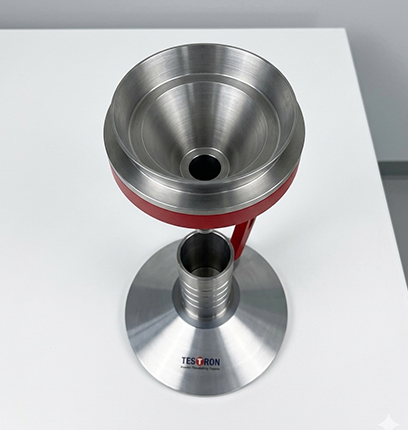
End Closure for Plastic Price & Cost in the USA
The end closure for plastic price depends on several factors including size, pressure capacity, and customization requirements.
Factors Affecting End Closure for Plastic Cost
- Pipe diameter compatibility
- Pressure rating
- Material quality
- Custom design requirements
- Testing standards
Testron offers competitive end closure for plastic cost without compromising on quality. For laboratories comparing end closure for plastic price, we provide transparent quotations and technical consultation.
Laboratory Plastic Pipe End Closure – Technical Advantages
Key Advantages
- High-pressure sealing capability
- Easy installation and removal
- Durable construction
- Compatibility with various pipe sizes
- Reliable performance under testing conditions
These advantages make the best end closure for plastic pipes an essential component for pipe testing laboratories.
Request Pricing & Technical Details
End Closure for Plastic Pipes in the USA – Industry Benefits
Using a high-quality end closure for plastic pipes in the USA provides multiple benefits:
- Improved testing accuracy
- Enhanced safety during testing
- Compliance with testing standards
- Reduced testing errors
- Increased equipment reliability
The plastic pipe end closure is a critical component for achieving consistent and reliable testing results.
How to Select the Best End Closure for Plastic Pipes
Choosing the best end closure for plastic pipes depends on your testing requirements.
Consider the Following:
- Pipe diameter and material
- Pressure requirements
- Testing standards
- Ease of installation
- Budget and end closure for plastic cost
As a reliable end closure for plastic supplier, Testron helps you select the right solution.
End Closure for Plastic Supplier – Complete Support
Testron is a trusted end closure for plastic supplier offering end-to-end support for your end closure for plastic pipes.
Our Services Include:
- Product consultation
- Custom design solutions
- Installation support
- Maintenance services
- Spare parts availability
Choosing the right end closure for plastic supplier ensures long-term testing reliability and a fair end closure for plastic price.
Frequently Asked Questions
What is an end closure for plastic pipes used for?
The end closure for plastic pipes in the USA is used to seal pipe ends during hydrostatic pressure testing.
What industries use plastic pipe end closure systems?
Industries such as pipe manufacturing, water supply, gas distribution, and laboratories use plastic pipe end closure systems.
What factors affect end closure for plastic price?
The end closure for plastic price depends on size, pressure capacity, and customization.
Can the laboratory plastic pipe end closure be customized?
Yes, Testron offers customized laboratory plastic pipe end closure solutions.
Who is a reliable end closure for a plastic manufacturer?
Testron is a trusted end closure for plastic manufacturer offering high-quality solutions.
What is the importance of pipe end caps in testing?
Pipe end caps ensure leak-proof sealing for accurate hydrostatic testing.
Request a Quote – End Closure for Plastic Pipes in the USA
If you are looking for a high-quality end closure for plastic pipes, Testron Group offers reliable and durable solutions for your testing needs.
When you request a quotation for an end closure for plastic pipes, you will receive:
- Detailed specifications of the plastic pipe end closure
- Competitive end closure for plastic price
- Transparent end closure for plastic cost
- Custom design options
- Expert consultation from a trusted end closure for plastic supplier
As a leading end closure for plastic manufacturer, Testron ensures high-performance testing solutions for laboratories and industries.
Contact Testron today to request your customized quote and upgrade your pipe testing setup with the best end closure for plastic pipes.