


Top Differential Scanning Calorimetry Applications Across Industries in the USA
Overview
Master the competitive edge with our deep dive into differential scanning calorimetry applications across major US sectors. Discover why Testron Group’s cutting-edge instrumentation is the ultimate choice for American businesses aiming for unmatched quality, safety, and innovation.
Introduction: The Source to Enhance Durability and Performance
The generation of thermal testing equipment is getting more advanced as industries and labs seek reliability and accuracy. In the era of sustainability, users seek the right and high-performance devices to produce equipment that meets buyers’ needs.
To determine the behaviour of a polymer, manufacturers need to perform thermal analysis before mass production. So, bridging the gaps between innovation and reliability is important; it can be achieved by using Testron’s top-tier differential scanning calorimeter, which transforms complex thermal data into actionable insights for superior material development.
The wide range of differential scanning calorimetry applications from the Testron group lets users access maximum ROI by investing the best amount in the marketplaces like the USA, Canada, and Northern American countries.
By utilizing differential scanning calorimetry applications, engineers can pinpoint the glass transition temperature, which serves as the “operating limit” for many plastics. The application of dsc analysis is the industry standard for determining the Oxidative Induction Time (OIT).
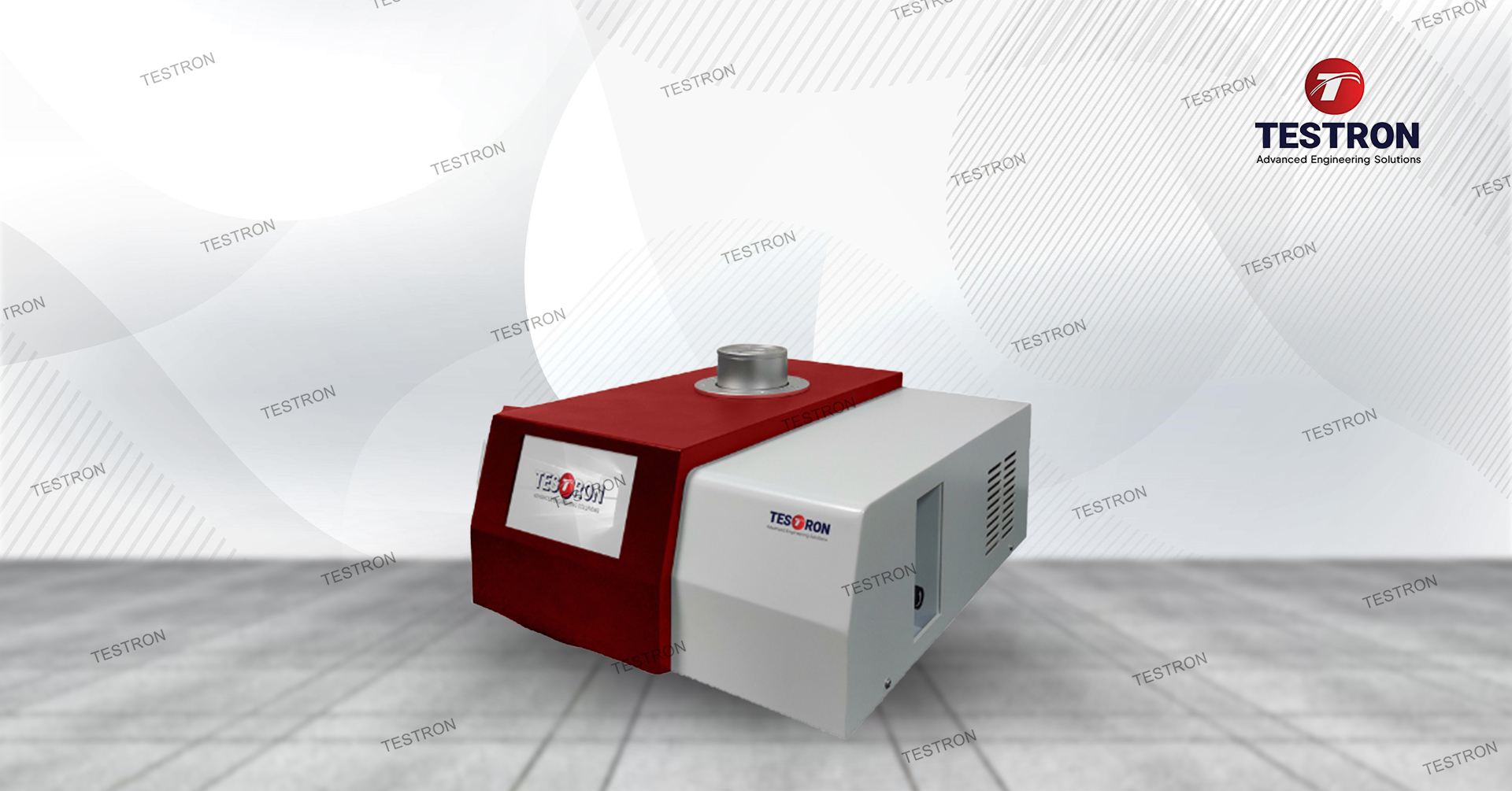
Ready to master your material’s thermal DNA and expand the range of differential scanning calorimetry applications? Explore the Testron TT-DSC300 for unmatched polymer precision.
Pharmaceutical Precision: Ensuring Drug Purity and Stability
The differential scanning calorimetry pharmaceutical application is the gold standard for solid-state characterization. The US Food and Drug Administration (FDA) requires rigorous documentation of a drug’s physical properties, and DSC provides a “thermal fingerprint” that is vital for regulatory approval.
Many drugs can crystallize into different molecular arrangements, known as polymorphs. While they are chemically identical, their solubility and absorption rates in the human body can vary wildly. A differential scanning calorimetry dsc application allows researchers to identify these different forms by observing their unique melting points and enthalpies.
Key technical details for pharmaceutical analysis come under the differential scanning calorimetry applications:
- Purity determination
- Protein folding and denaturation
- Eutectic purty
- Glass transition of amorphous solids
- Solvate and hydrate identification
Check out our High-Sensitivity DSC Models designed for pharma. Explore more differential scanning calorimeter application with expert guidance!
Food Science & Packaging: Quality Control from Shelf to Table
The differential scanning calorimetry instrumentation application has become a vital tool for food scientists looking to perfect everything. Since food is a complex mixture of water, proteins, fats, and carbohydrates, its thermal behavior is incredibly intricate.
By applying dsc analysis application techniques, manufacturers can optimize their cooling tunnels to ensure a perfect product every time. Differential scanning calorimetry applications allow packaging engineers to test the multi-layer films used in modern food pouches, ensuring each layer performs its specific role of oxygen barrier, moisture barrier, or structural support.
The differential scanning calorimetry instrumentation application sets the following advantages for food and packaging:
- Understanding how heat affects meat or dairy proteins.
- Measuring the energy required for starches to cook.
- Using DSC to find the exact melting point of the inner lining of packaging to ensure airtight seals.
- Monitoring the transition of sugars.
- Identifying the presence of cheaper adulterant oils.
Keep your products at peak quality from the factory to the fork. Discover Testron Group’s DSC Solutions for food science. Partner with us today and avail a complete detail on the application of dsc analysis!
Advanced Materials: Aerospace, Electronics, and Beyond
In sectors like aerospace and semiconductor manufacturing, the differential scanning calorimetry instrumentation application is used to push the boundaries of what materials can do. In the aerospace sector, carbon fiber composites are held together by high-performance resins. The dsc analysis application is used to monitor the “degree of cure.”
Partnering with a trusted differential scanning calorimetry manufacturer ensures that bridging the gaps between innovation and reliability is achievable, transforming complex thermal data into actionable insights for superior material development. The differential scanning calorimeter application also plays important roles in the burgeoning green energy sector.
Let’s understand what roles the differential scanning calorimetry instrument application plays in different sections:
- Calculate specific heat capacity
- Glass transition in composites
- Curing energy calculation
- Studying isothermal crystallization
- Understand solder characterization
Talk to our engineering team today to solve your toughest material challenges and get complete ideas on the differential scanning calorimetry applications!
Conclusion
In conclusion, differential scanning calorimetry applications are integral to the success of diverse industries across the United States. From ensuring that a life-saving medication is stable and pure to verifying that an aerospace composite can withstand the rigors of flight, the data provided by a differential scanning calorimeter application is invaluable.
By choosing a high-precision instrument, such as those offered by Testron Group USA, labs can ensure they stay ahead of the curve with technology.
Whether your focus is on differential scanning calorimetry pharmaceutical application or the durability of polymers, having the right tools is the first step toward industrial excellence and expanding your differential scanning calorimetry applications.
Frequently Asked Questions
What standards do DSC instruments in the USA typically follow?
In the United States, differential scanning calorimetry applications must comply with ASTM and ISO standards. Testron Group’s models, like TT-DSC300, ensure that the data is legally defensible, reproducible, and meets the strict quality requirements of global industrial supply chains.
What are the key benefits of differential scanning calorimetry instrumentation application in R&D?
The main benefits of differential scanning calorimetry instrumentation application include its ability to provide rapid, quantitative data on a material’s thermal properties with very small sample sizes. This allows R&D teams to quickly screen new material formulations, optimize chemical reactions, and predict long-term stability.
Why is baseline stability important in a dsc analysis application?
Baseline stability is crucial in any dsc analysis application because it represents the instrument’s “background noise.” A stable, flat baseline allows the operator to detect very subtle thermal transitions. High-quality instruments, like the TT-DSC300, provide excellent stability, ensuring that every peak measured is a real material property and not an error.
Is there a high-pressure differential scanning calorimeter application?
Yes, a high-pressure differential scanning calorimetry instrumentation application is used for samples that might evaporate or boil at normal atmospheric pressure.
Can DSC be used for food quality testing in the USA?
Yes, the dsc analysis application is vital for the American food industry. It is used to analyze the melting profiles of fats in products like chocolate and butter to ensure perfect texture.