Pipe Cutting and Chamfering Machine in the USA: Complete Buyer’s Guide for Industrial Fabrication in 2026
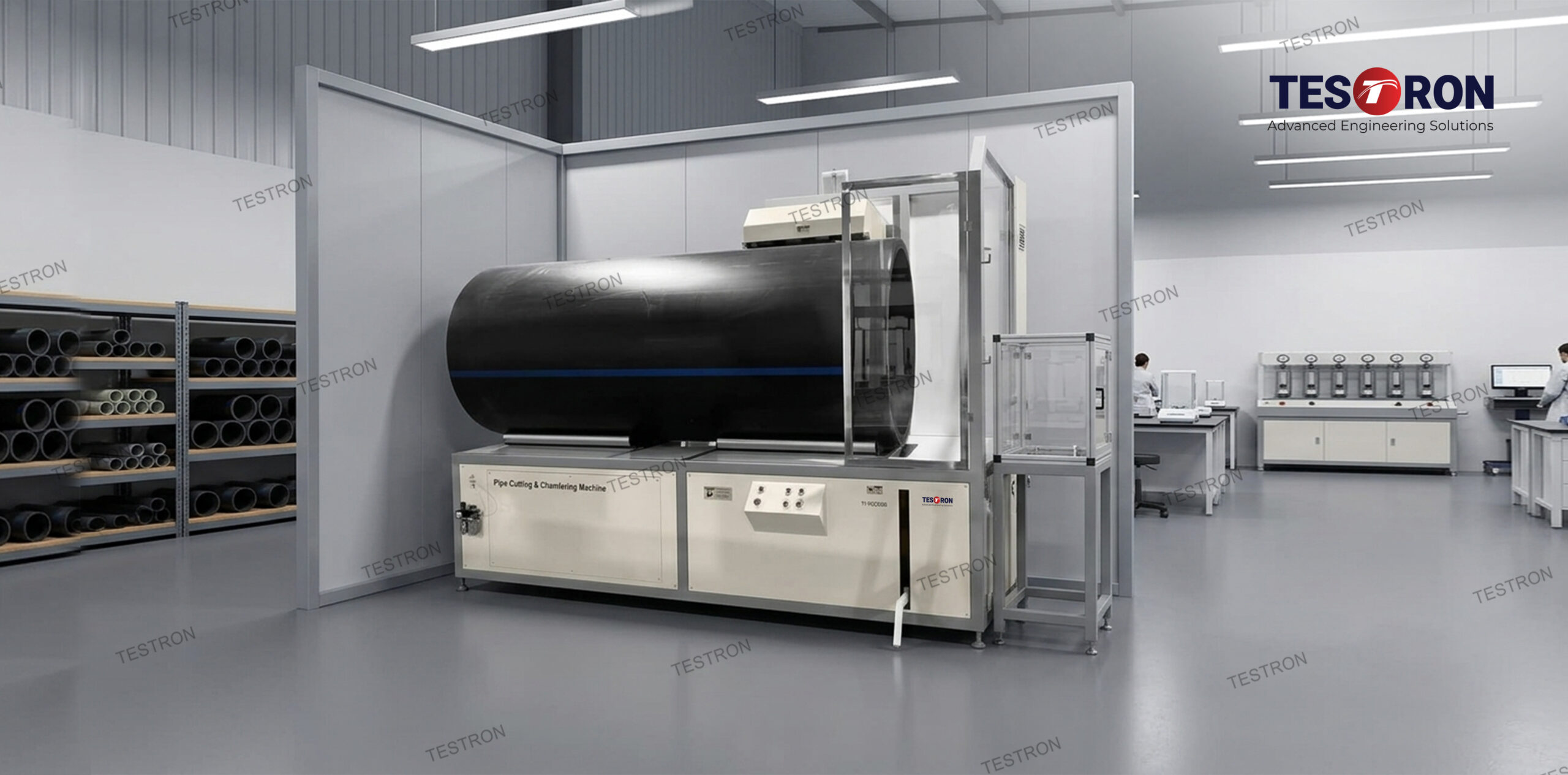
Pipe cutting and chamfering accuracy is a crucial issue for the present-day industry, pipeline laying, quality control tests, and production. An incorrectly prepared or poorly chamfered pipe may lead to alignment issues, ineffective joints, inaccuracies in laboratory testing, waste of material, and extra finishing.
If your company works with PVC, HDPE, CPVC, composite, or metal pipes, you may find it useful to get yourself a pipe cutting and chamfering machine in the USA, thus improving the quality and efficiency of your business.
It is becoming more and more relevant in the UK, as pipe preparation for jointing, pressure testing, measurement, and testing purposes is becoming an obligatory part of the production process there. Here is a buyer’s guide that will help you to choose a pipe cutting and chamfering machine in 2026.
What Is a Pipe Cutting and Chamfering Machine?
A pipe cutting and chamfering machine is an industrial process in which a pipe is cut to a specified length, followed by preparing its end for a specified chamfer or bevel.
Rather than requiring the pipe to be transported from one workstation to another for these operations, a combined pipe cutting and chamfering equipment allows both steps to be accomplished in one processing cycle. The result is reduced handling, less reliance on the operator, preparation time, and sample-to-sample variance.
Based on the specific configuration of the equipment, it may also be called :
- Pipe cutting and chamfering tool
- Pipe cutting and chamfering machinery
- Pipe cutting and chamfering instrument
- Pipe cutting and chamfering equipment
- Pipe cutting and chamfering device
- Pipe cutting and chamfering apparatus
- Pipe end chamfering machine
- Automatic pipe cutting machine
- Industrial pipe cutting machine
While these terms are frequently interchangeable, industrial purchasers need to be aware of the actual operating characteristics of the pipe cutting and chamfering device.
Building your Full Pipe Testing Lab
Add the TT-PCC1200 to a range of hydrostatic testers, test baths, pipe caps, burst pressure testers and more Material Testing Solutions.
Talk to Testron Group about building your full pipe testing machine system.
Why Good Pipe Preparation is Important
Cutting is not only the first step in the manufacturing process, but also a condition of the end of the pipe can affect other subsequent steps.
Irregularity and deformation in the cut may create difficulties during:
- The socket assembly and joining of the pipes
- Butt fusion and welding
- Assembly of test end closures
- Hydrostatic pressure testing
- Short-time burst testing
- Dimensional inspection
- Test for leak tightness
- Material and laboratory testing
A consistent chamfer produced by an automatic pipe cutting machine will help the smooth insertion of the pipe into the fitting or end closure. This will also decrease the risk of damaging the seal during assembly.
In testing laboratories, good pipe preparation is especially significant. The dimensions, end condition, alignment and assembly of the specimen may have an effect on the distribution of the pressure during the test. The pipe cutting machine itself does not conduct the ASTA, ISO or BS test, but helps to prepare the specimen before it is assembled into the pipe testing equipment in the UK and USA.
Introducing TT-PCC1200 Pipe Cutting and Chamfering Machine
TT-PCC1200 by Testron Group is a tool to cut and chamfer large diameter pipes in industrial production and in laboratory samples preparations.
This high-performance pipe cutting and chamfering equipment utilizes planetary rotary cut and pneumatic clamp to perform cutting and chamfering operations in sync. This allows companies to minimize the necessity of additional pipe-end processing.
Based on the information from the company specifications, the TT-PCC1200 pipe cutting and chamfering device features:
- Pipe diameters from 90 mm to 1200 mm;
- Wall thickness up to 80 mm;
- Chamfering angles of 15 degrees;
- Planetary rotary cut;
- Pneumatic pipe clamp;
- Soft electronic start;
- Automatic start protection;
- Overload protection;
- Rated power supply of 380 V 50 Hz and 2 kW.
The pipe cutting and chamfering apparatus is offered to process HDPE, PVC, CPVC, composite pipe and some kinds of metal pipes. Customers need to specify the material type, wall structure, blades setup and production needs with the supplier.
Main Applications of Pipe Cutting and Chamfering Machine in the USA and UK
1. Plastic Pipe Manufacturing
Plastic pipe producers such as PVC, HDPE and CPVC pipe manufacturers may use the machine to cut pipes into production batches and perform quality-control samples. Cutting consistency reduces variations in dimensions and facilitates further post-extrusion work.
2. Water and Wastewater Networks
Water supply, drainage, and wastewater systems often involve pipes that have to be prepared for joining, installing, or checking the pressure in them. Preparing the end of a pipe will assist in the fitting engagement and eliminate the need for further finishing on site.
3. Oil, Gas and Industry Piping
Piping industrial projects require controlled pipe preparation prior to welding, joining, or testing. A heavy-duty pipe end chamfering machine can assist in achieving a consistent geometry of the bevel of multiple pipes.
4. Pipe Test Lab
To prepare samples of pipes for testing involving hydrostatic pressure, bursting, tensile, dimensional, and joint strength tests. The machine can be used in combination with pressure testers, heat chambers, end caps, UTMs, impact testers, and stiffness test machines.
5. Construction and Fabrication Facilities
The machine can automate pipe cutting and eliminate grinding of pipes required for installation and fabrication.
6. Universities
Universities can utilize the machine for preparing samples and conducting research in plastic pipe testing.
Relevant Standards and Test Methods for Pipe Cutting Equipment
A pipe cutting and chamfering instrument is usually a specimen preparation or fabrication machine rather than the instrument utilised in conducting the final test. However, it can aid in the preparation of pipes used in the following recognized test methods.
- ASTM D1598: Method to test time to failure of plastic pipe subjected to constant internal pressure.
- ASTM D1599: Short term hydraulic failure or burst pressure of plastic pipes, tubing and fittings.
- ISO 1167 Series: Methods for testing internal pressure resistance of thermoplastic pipes, fittings, and assemblies.
- BS EN ISO 1167: UK laboratories use this standard for testing of internal pressure and preparation of pipe specimens.
The preparation procedure will depend on the type of pipe, its diameter, end fitting, and purpose of the test.Ensure that you have the latest edition of the standard.
Considerations Prior to Purchase
When selecting a pipe cutting and chamfering machine in the USA, consider these factors:
- Diameter of Pipe: You need to be certain that the pipe cutting equipment can handle both your present and future needs with respect to the diameter of the pipe. The TT-PCC1200 can handle pipes having a diameter from 90 mm to 1200 mm.
- Thickest Pipe Wall: The automatic pipe cutting machine should be able to cut thick walls without any problem.
- Cutting System: Consider accuracy, durability of the blades, speed, replacement, and compatibility with materials when evaluating pipe cutting machinery.
- Chamfering Angle: Make sure the angle is compatible with your needs when it comes to fitting and testing purposes. The TT-PCC1200 produces a 15° chamfer.
- Clamping: Pneumatically-driven clamping on a pipe cutting and chamfering apparatus is helpful for secure positioning of the pipe.
- Safety Features: Check for guarding, emergency stop button, start protection, and overload protection on any pipe cutting and chamfering instrument.
- Electrical Specifications: The TT-PCC1200 pipe cutting machine is supplied with a 380 V, 50 Hz, and 2 kW rating. Buyers from the USA need to verify the compatibility of their site beforehand.
Service, Training, and Spare Parts from Your Pipe Cutting and Chamfering Machine Manufacturer
While an economical quote may be costly if blade, pneumatic, technical support, and spare part acquisition is challenging.
When selecting a pipe cutting & chamfering machine manufacturer, some aspects to consider include:
- Installation and commissioning
- Operator training
- Preventive maintenance instruction
- Availability of blades and consumables
- Remote assistance
- Warranty period
- Technical documentation
- International services
Price of Pipe Cutting and Chamfering Machine in the USA
The price of pipe cutting and chamfering machines is more than its purchase cost.
Important factors to consider when determining the pipe cutting and chamfering machine price are:
- Maximum supported diameter
- Maximum wall thickness
- Automation for cutting and chamfering
- Material of the pipe
- Motor and cut system configuration
- Pneumatic requirement
- Type of blade
- Safety
- Electrical modification
- Delivery and installation location
- Training and commissioning
- Spares and warranty
Since industrial equipment is usually built based on application, a customer needs to request a customized quote rather than a general quote online.
Upgrading Your Pipe Cutting Process with the Right Supplier
Optimize your cutting accuracy and chamfering process with the TT-PCC1200.
As a leading pipe cutting and chamfering machine manufacturer, Testron Group will assist you in every aspect with an individual quotation for your pipe cutting and chamfering equipment.
Total Pipe Cutting and Chamfering Machine Cost Analysis
Total pipe cutting and chamfer machine cost should consist of capital cost and operating cost.
Analyze the following items:
- Purchase cost
- Freight, custom, and delivery charges
- Installation and setup costs
- Electrical installation cost
- Compressed air supply
- Blades and other consumables
- Maintenance costs
- Training costs for operators
- Machine downtime during blade change
- Estimated service life of the machine
- Technical assistance availability
A more automated machine will have higher purchase cost but it can produce savings through reduced grinding, handling, rejects, and reliance on operator skills.
Comparison of Manual and Automatic Pipe Cutting Systems
Although manual saws and grinders might serve well for the occasional preparation of small pipes, their drawbacks will be more evident for facilities that process large diameters and thick walls in batches.
Benefits of an automatic pipe cutting machine over manual tools include:
- Greater consistency in pipe lengths
- Consistent chamfers
- Reduced manual finishing
- Increased batch throughput
- Enhanced safety
- Less reliance on operator skills
- Ease of integration with laboratory and manufacturing procedures
For manufacturers who process pipes daily, these benefits will make the cost-effective investment much better compared to manual cutting and chamfering.
How to Choose the Pipe Cutting and Chamfering Machines Manufacturer
It is important that the right pipe cutting and chamfering machine manufacturer should know the principles of pipe fabrication and testing.Before making the decision to choose the supplier, give him all the information about the application, namely:
- Min and max pipe diameter
- Max wall thickness
- Pipe material
- Chamfer angle required
- Daily capacity
- ASTM/ISO/BS standard to follow
- Voltage and frequency on-site
- Availability of compressed air
- Installation place
- Training and warranty support needed
Competent manufacturers will analyse these data and propose an optimal pipe cutting and chamfering device instead of supplying a generic model for all applications.
What Are the Reasons to Buy from Testron Group?
Testron Group supplies the TT-PCC1200 along with other pipe-processing and pipe testing machines in the USA.
For laboratories and manufacturing firms, the benefit of dealing with a material-testing equipment supplier is the possibility to discuss the whole process – sample cutting, chamfering, hydrostatic testing, burst testing, impact testing and dimensional inspection.
TT-PCC1200 combines big diameters, pneumatic clamping, planetary cutting and simultaneous pipe end preparation in one machine for industrial use. Hence, it is suitable for pipe manufacturers, testing labs, infrastructure contractors, fabrication plants and research facilities in the USA and the UK.
Conclusion
Selecting a pipe cutting and chamfering machine in the USA is more complex than merely comparing the purchase price. It involves evaluating pipe diameter, wall thickness, material type, chamfer requirements, cutting method, safety, power supply, and long-term maintenance service.
The same applies to facilities using ISO and BS EN testing procedures in the UK.
Right selection of the pipe cutting machine will decrease manual preparation time, increase accuracy of pipe ends preparation and streamline the work flow at fabrication and jointing operations. The machine will be particularly useful for facilities processing large-diameter PVC, HDPE, CPVC, composite and metal pipes.
Make Your Own Quote Request
Thinking about installing a new pipe fabrication line or testing lab?
Get in touch with Testron Group regarding your pipe size, wall thickness, material, production capacity and testing standards needed. Make your own quote request for your custom pipe cutting and beveling machine.
For more info, get in touch with us at info@testrongroup.com
Frequently Asked Questions
What is a pipe cutting and chamfering machine used for?
Used for cutting the pipe to desired length and producing a well-controlled chamfer or bevel at pipe ends which will then enable the pipe to be ready for joining, welding, installation of the fittings, mounting of end closures, or testing.
What are pipe materials suitable for processing by the TT-PCC1200 machine?
Product description provided for pipes from HDPE, PVC, CPVC, composite, and some metallic pipes. The exact pipe material and wall thickness shall be taken into account to determine final design.
Does the pipe cutting machine conduct ASTM or ISO pipe pressure tests?
No, the machine cuts the pipe prior to carrying out any of the tests. The cut pipe has to be mounted on the appropriate hydrostatic, burst, tensile or impact testing machines depending on the standard being used.
How do I get a quotation for the pipe cutting & chamfering machine?
Provide your pipe diameter, material, wall thickness, chamfer dimensions, voltage, production capacity, and delivery location to the supplier for quotation preparation.
Is the machine suitable for UK pipe testing labs?
The machine could be suitable for use in UK pipe testing labs providing that it is compatible with the standards and site safety requirements.